ServicesWalkways and Sidewalks
Walkways and Sidewalks in Brea
We pour concrete walkways and sidewalks that lead people to your door on a firm, even path. Before anything is dug, you get a written scope covering the base, thickness, joints and finish, so the price you agree to is the price you pay.
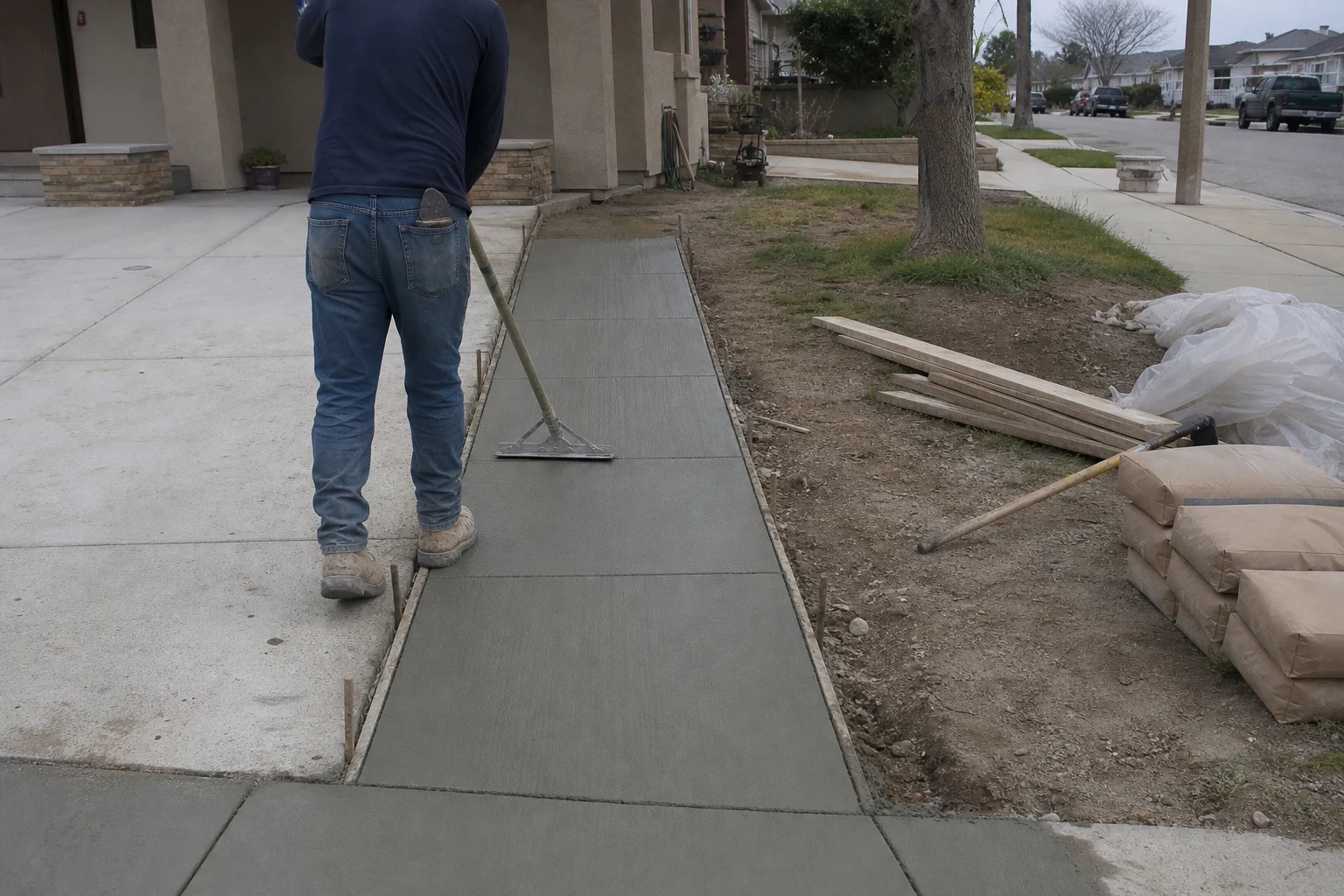
A path built for daily footsteps
A walkway is the part of your home's concrete that people touch most. Guests use it, deliveries cross it, and you walk it in the dark carrying groceries. It needs a steady slope for drainage, a surface that grips when wet, and edges that sit level with the lawn and the porch.
We pour new walkways from the street or driveway to the front door, garden paths along the side of the house, and replacement sidewalk sections where the old concrete has heaved or settled past saving. The clay soil common around Brea swells after winter rain and shrinks in summer, so the base underneath gets as much attention as the finish on top.
Everything we plan to do is written down before work begins: how much we remove, what goes under the slab, where the control joints fall and how the surface will be finished. If anything needs to change once we start, we talk it over with you first.
What the job covers
- 01
Tear-out and hauling
Any old path or pavers in the way are broken up, loaded and taken off site. Roots beneath the old slab are trimmed only where the tree can take it.
- 02
Packed base
The soil is graded, then crushed aggregate base is added and compacted layer by layer. That firm footing keeps the path from rocking or dropping at one end.
- 03
Forms, pitch and steel
Forms are set with a slight side-to-side pitch so water drains off the path. Rebar or wire mesh is placed as the written scope calls for, raised inside the slab instead of resting on the soil.
- 04
Joints and rounded edges
Joints are tooled or cut at regular intervals so the concrete cracks where we plan as it moves. Rounded edges hold up against chipping and feel finished underfoot.
- 05
The finish you choose
A light broom texture holds traction when sprinklers wet it. Exposed aggregate, a salt finish, integral color or a stamped pattern are also available, and our Stamped Concrete page goes into patterns further.
- 06
Cure and cleanup
The slab is cured so it strengthens evenly, then the forms come out, soil is backfilled along the edges and the area is swept.
Questions about Walkways and Sidewalks?
Call(714) 462-9549Signs your walkway is ready to be replaced
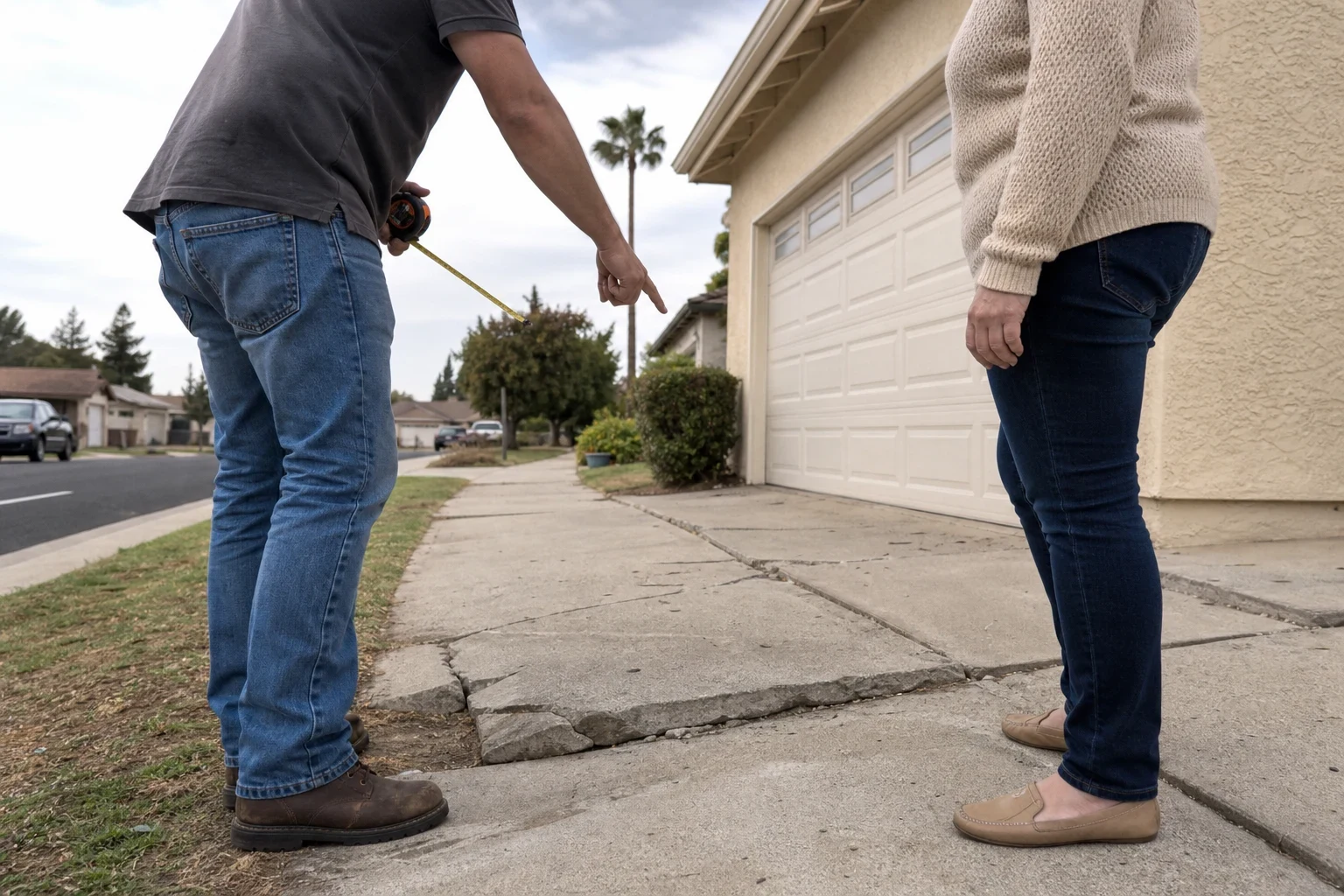
Trip edges between sections
When one panel sits higher than the next, someone will eventually catch a toe. Lifts like this usually come from roots or soil movement under the slab.
Water pooling after rain
Puddles that linger mean the slope has been lost. Standing water stains the surface and turns slick with algae in shaded spots.
Cracks that keep spreading
Fine shrinkage cracks are normal in concrete. Wide cracks with broken pieces or sides that no longer line up point to a base that has failed.
Flaking or worn-through surface
Scaling exposes the stone in the mix and makes the whole entry look tired from the curb, even when the path is still flat.
A layout that no longer fits
The path is too narrow for two people side by side, cuts awkwardly through the lawn, or never reached the side gate. A new layout changes how easily you move around your home.
Steps in a walkway job
- 1
Phone call and visit
You describe the path you want over the phone, and we book a time to measure it and look at the slope, the soil and nearby roots.
- 2
Quote in writing
Each part of the scope is written out: tear-out, base depth, slab thickness, steel, joints, finish and cleanup. We answer your questions before you commit, not once the truck shows up.
- 3
Getting the site ready
Old material comes out, the base is graded and packed, and forms go in. Utility lines are marked before digging, and the forms get one last slope check.
- 4
Pouring and finishing
Most paths are poured and finished the same day. The crew places, levels and floats the concrete, then adds the finish and tools the joints while it can still be worked.
- 5
Curing and final walk
Walking on it is usually fine within a day or two. We remove the forms, backfill, tidy up and walk the finished path with you.
What goes into a walkway price
A walkway's cost depends on the amount of concrete and the effort it takes to place it. Each item gets its own line in your written quote, so you can see what you are paying for and change the scope if you want.
- How long, wide and thick
- A wider or thicker path takes more concrete and more base. Sections that will see a wheelbarrow or the odd car are poured thicker.
- What needs removing
- Taking out an old slab, pavers or a dense tangle of roots adds labor and dump costs. Open ground needs less prep.
- Reaching the path
- A path the truck chute can reach directly goes in faster than one behind a fence that calls for a pump or wheelbarrows.
- Surface and color
- Broom texture is the most basic. Exposed aggregate, integral color and stamped patterns take added material and finishing time.
- Permits for city sidewalk
- Work in the strip by the street often requires a city permit and inspection. When yours does, the quote shows the permit and how it affects timing.
Common walkway questions
Do you redo the city sidewalk in front of a home?
In many cases. Sidewalk in the public right-of-way generally needs a city permit, and the city decides the width, thickness and finish. We look up those rules before quoting and write the permit step into the scope.
When is a new walkway ready for foot traffic?
Everyday walking is usually fine after 24 to 48 hours. The concrete keeps getting stronger for about four weeks, so keep heavy carts and equipment off until then. We will tell you what to expect for your pour.
Is the walkway going to crack?
Concrete shrinks while curing, so fine cracks are normal. A packed base, good curing and well-spaced control joints keep cracks in the joints and out of the middle of panels. Your quote shows the joint layout.
Will it look like my driveway or patio?
A broom texture can be matched closely, and we aim for a similar color. Fresh concrete starts out lighter and evens out as it weathers. If a driveway or patio is also on your list, pouring them together keeps them consistent.
Will tree roots need cutting?
At times. We trim only what a level base requires and stay clear of big roots near the trunk. If a root will likely keep pushing up, we may suggest moving the path a little or adding a root barrier, and we write that option down.
Plan your new walkway
Tell us where people walk and where the current path falls short. We'll arrange a visit and put the full scope and pricing in writing before any work starts.