ServicesStamped Concrete
Stamped Concrete in Brea
We pour and stamp new concrete in slate, stone, brick and wood-plank patterns for patios, walkways, pool decks and driveways. Before any work starts, you get a written quote that names the pattern, the colors, the base work and the sealer.
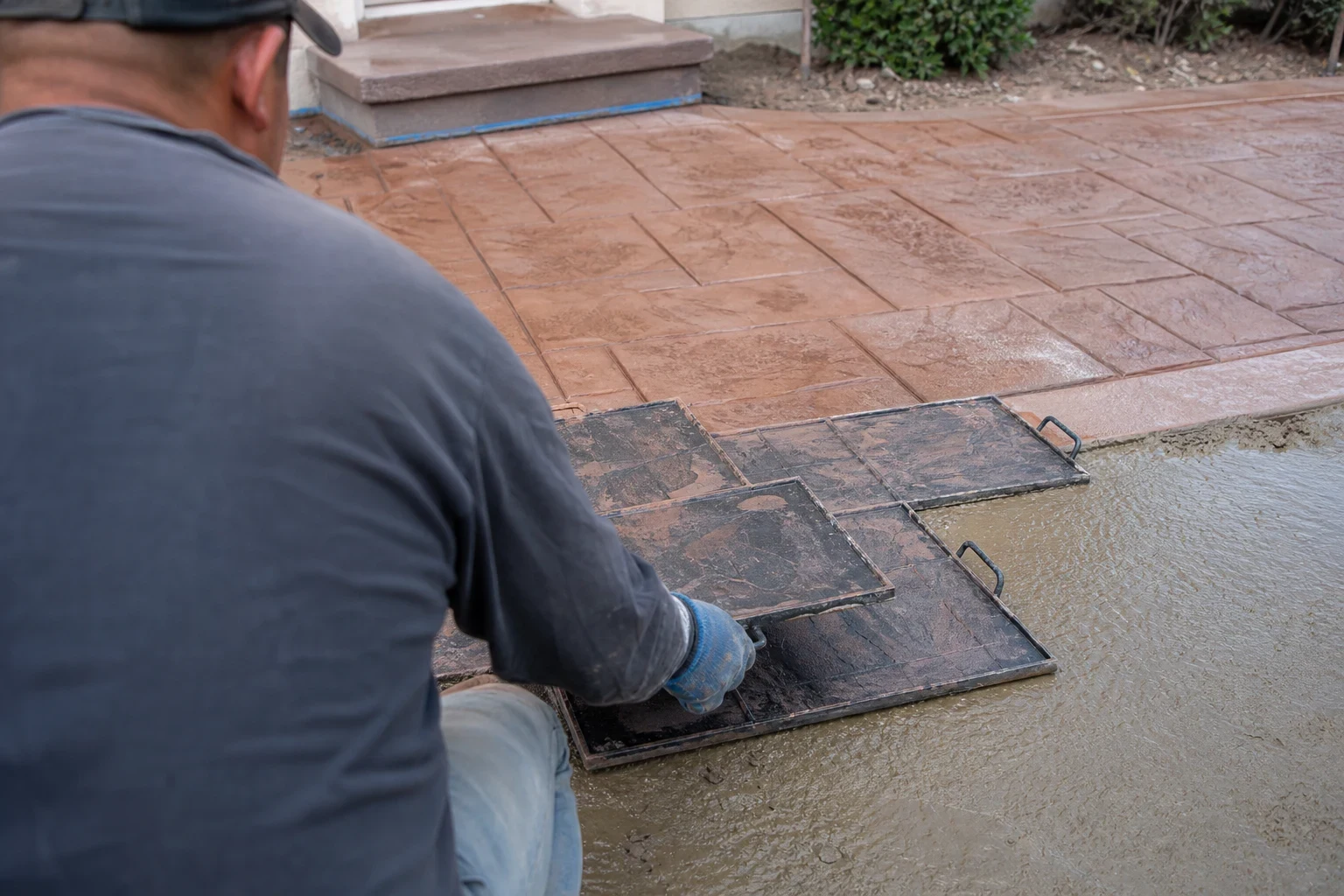
Patterned concrete that holds its color and its edges
Stamped concrete is fresh concrete pressed with textured mats while it is still workable, then colored and sealed. It gives you the look of stone or pavers in one continuous slab, with no joints for weeds to push through and no units to settle out of line.
It is the right call when you want a finished surface around your home that looks considered, not just functional. It suits a back patio, an entry walk, a courtyard or the border of a plain driveway. It is less suited to a spot you plan to dig up in a few years, since a stamped slab is meant to stay put.
We put the details in writing before we schedule a pour. You see the pattern name, how color goes in, where the control joints fall and which sealer we use, so the finished slab matches what you agreed to.
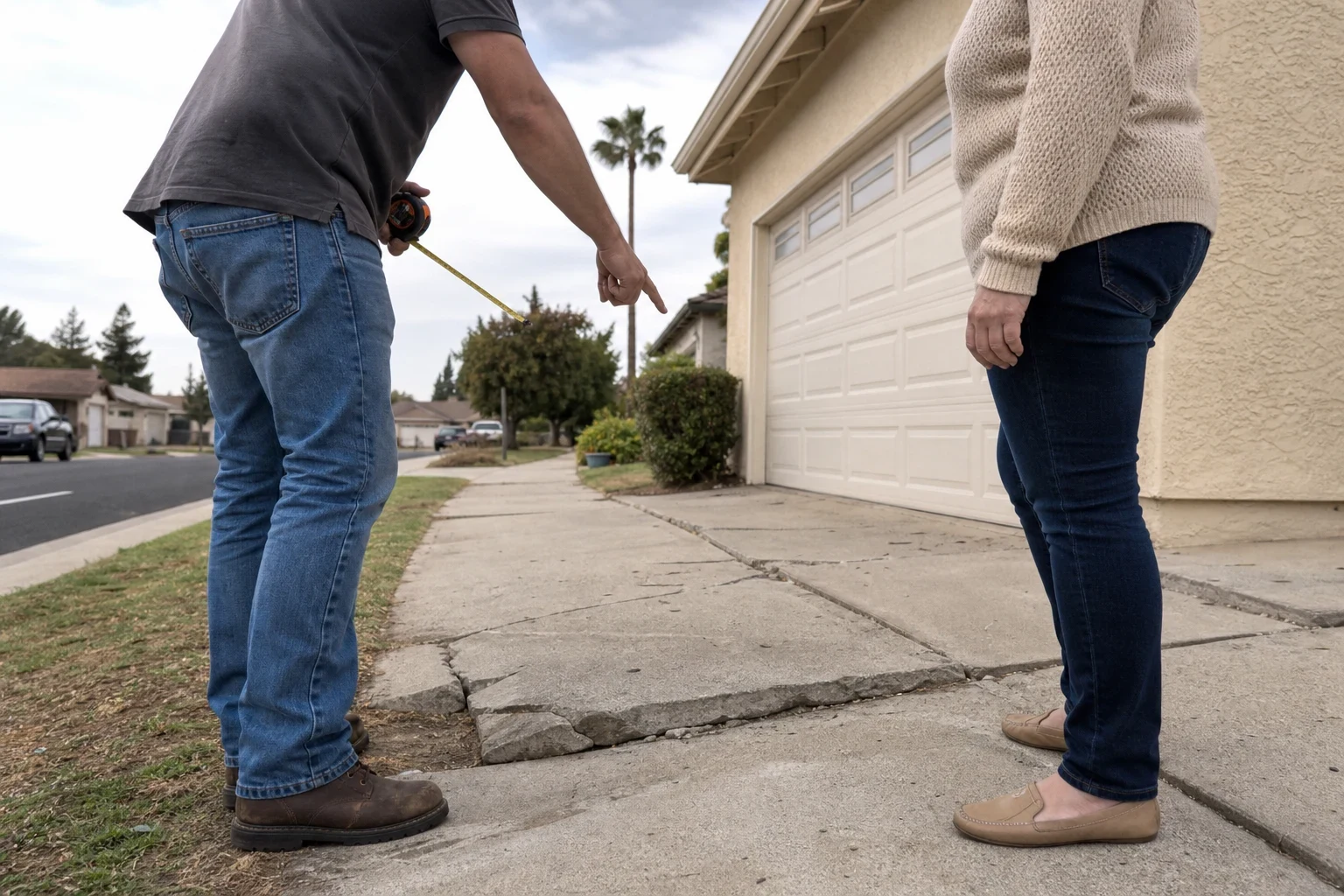
What a stamped concrete job includes
- 01
Layout and pattern selection
We measure the area, mark the edges and walk through pattern and color samples with you. We also suggest a border or band where it helps the design read cleanly.
- 02
Excavation and base
We remove soil or old concrete to the right depth and compact a gravel base. A firm, even base is what keeps the pattern from cracking across its lines later.
- 03
Forms, reinforcement and drainage slope
Forms are set so water runs away from your home and off the slab. We place rebar or wire to suit the area and how it will be used.
- 04
Color and stamping
Color goes in through the mix, a dry-shake hardener on the surface, or both, with a release agent that adds a second tone. We stamp at the point where the concrete takes a crisp impression without tearing.
- 05
Joints, cleanup and sealer
Control joints are cut along pattern lines so they blend in. After the release is washed off and the slab has cured, we apply a sealer that deepens the color and helps resist stains and sun.
Questions about Stamped Concrete?
Call(714) 462-9549Signs stamped concrete is the right fit
Plain gray feels unfinished
If your patio or walk works fine but looks like a utility slab, a pattern and color change how the whole yard reads.
You like pavers but not the upkeep
Pavers can shift and sprout weeds in the sand joints. A stamped slab gives a similar look without loose pieces.
An old slab is coming out anyway
When concrete is being removed for a new layout, it is a good moment to choose a decorative finish instead of matching the old one.
You want spaces to tie together
Using one pattern for a patio, walkway and pool deck makes separate areas feel planned as a set.
Slip resistance matters
Around a pool or on a sloped walk, a textured stamp and a grit additive in the sealer give better footing than a smooth trowel finish.
Steps from first visit to final seal
- 1
Visit and samples
We check the area, the grade and access, and show you patterns and colors in person. Looking at samples outdoors in your own light helps avoid surprises.
- 2
Scope and price on paper
The written scope lists square footage, demolition, base depth, reinforcement, pattern, colors, joints and sealer. If something could shift the price, such as poor soil under old concrete, we explain how we would handle it before starting.
- 3
Preparation
We dig out, compact the base, build the forms and set the reinforcement. Lawns, walls and plants nearby are covered, and the forms are checked for slope.
- 4
Pouring and stamping
A crew places, colors and stamps the concrete, timing each step to how fast it sets. On hot days we begin early so the surface stays soft enough for sharp impressions.
- 5
Washing, curing and sealing
A few days on, we rinse off the release agent and cut or tidy the joints. After the slab cures, we seal it and look over the finished work with you.
What sets the price of stamped concrete
Stamped work runs higher than a broom finish because it adds color, mats, release and sealer, along with a bigger crew on pour day. Each of these shows up in your written quote so you can see where the money goes. The factors below change it the most.
- Area and layout
- Bigger areas spread setup costs over more square footage. Curves, tight corners and lots of steps or edges mean more forming and more hand detail around the mats.
- Color and pattern stages
- One integral color with a single release tone is simpler than a hardener with an antiqued second color. A border in a contrasting pattern adds another stage.
- Tear-out and base
- Breaking up and hauling old concrete adds labor and dump costs. Soft or clay-heavy ground may call for digging deeper and adding more base rock.
- Reaching the forms
- When a truck can pull up to the forms, the pour moves faster. A narrow side yard can mean a pump or wheelbarrows, which changes the crew and the schedule.
- Permits and sealer
- Work touching a city sidewalk or driveway approach may need a permit, and the quote says so. The sealer type and any grit additive also affect the total.
Common stamped concrete questions
Does stamped concrete crack?
Any concrete can form small cracks as it shrinks and the ground shifts. We limit this with a compacted base, reinforcement and control joints set along the pattern lines, where a crack is much harder to spot. Drainage away from the slab helps as well.
Will it be slippery when wet, like around a pool?
Sealer can make the surface slicker, so by pools and on slopes we mix a fine grit into the sealer and recommend more textured patterns. Stone and slate textures grip better than smooth ones.
How often should it be resealed?
Most stamped surfaces look their best with a fresh coat every few years, depending on sun and foot traffic. Faded color or water that stops beading up are the signs. Long sunny summers wear sealer down faster on slabs in full sun.
Can my existing concrete be stamped?
Stamping only works on fresh concrete that can still be shaped, so we take out the old slab and pour new. That also gives us a chance to fix the base and slope, which is often what made the old slab look worn.
When can we start using it?
Walking on it is usually fine after a day or two. Keep cars off a stamped driveway for about a week, and hold off on heavy furniture or planters until the sealer has cured.
Will the color look like the sample?
Samples come close, but concrete shifts with the mix, the weather on pour day and the finish. We stick with the same supplier mix for the whole job and write the color names on your quote, so later additions can be matched as closely as possible.
Map out your stamped concrete in writing
Let us know the area, the look you are after and how the space gets used. We will schedule a visit, bring samples and send a written quote to review before anything goes on the calendar.