ServicesSteps and Stairs
Concrete Steps and Stairs in Brea
We form and pour new concrete steps for front entries, back doors, patios and sloped yards. Every riser is measured to match, the base is built to stay put, and you see the full scope and price factors in writing before we break ground.
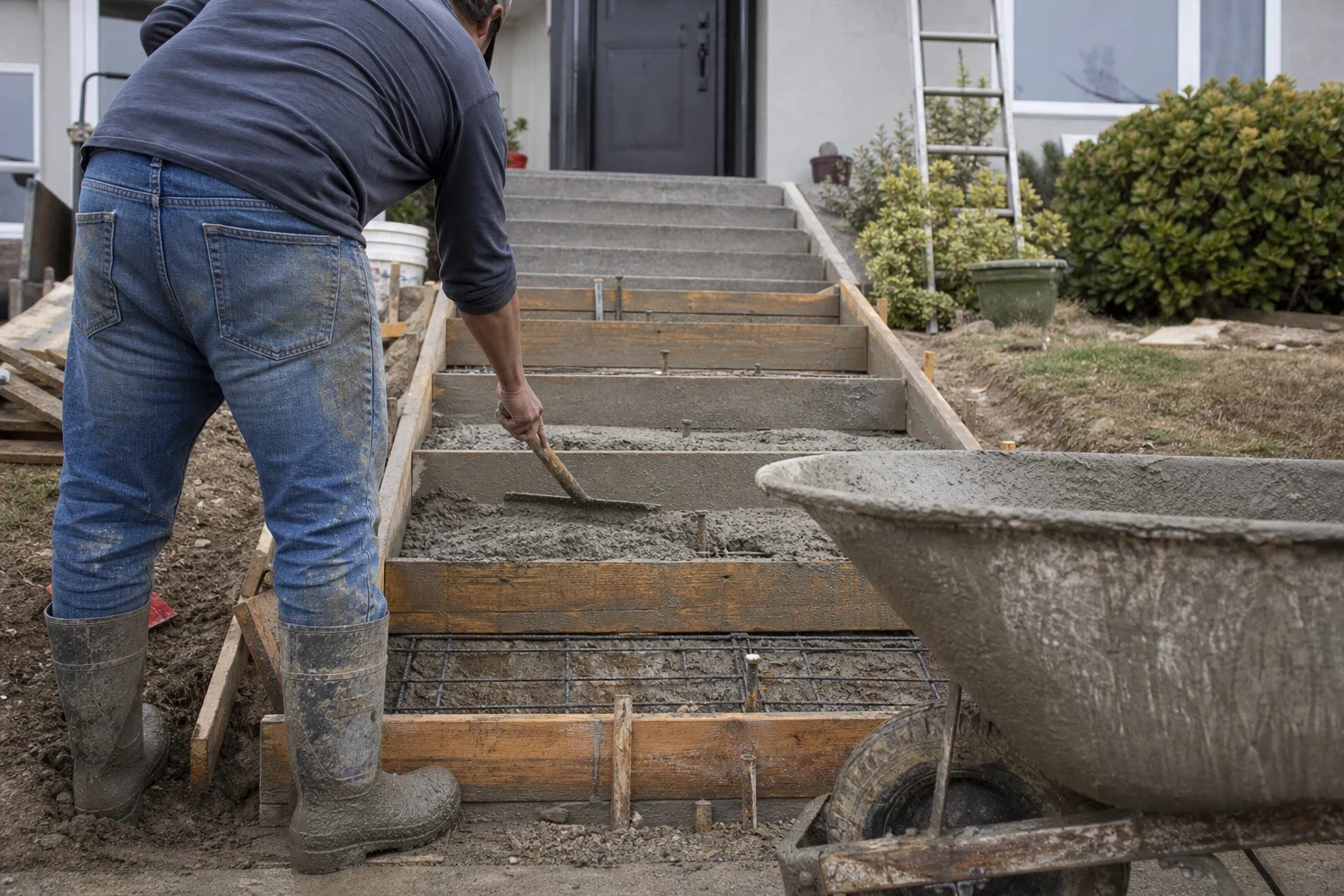
Steps that feel right every time you use them
Steps get used more than almost any other concrete at your home. You climb them carrying groceries, in the dark, in the rain. When the risers vary by even half an inch, your foot notices, and that is how trips happen.
We build steps as new construction: tear out what is there if needed, set a compacted base, tie reinforcement into the adjoining slab or foundation, and form each riser and tread to the same dimensions. The finish is chosen for grip first and looks second, though it can match a stamped patio or a smooth walkway nearby.
Before any of that, you get a written quote that spells out the number of steps, the width, the finish, demolition, haul-off and any handrail work. If something on site would change the price, we tell you before the pour, not after.
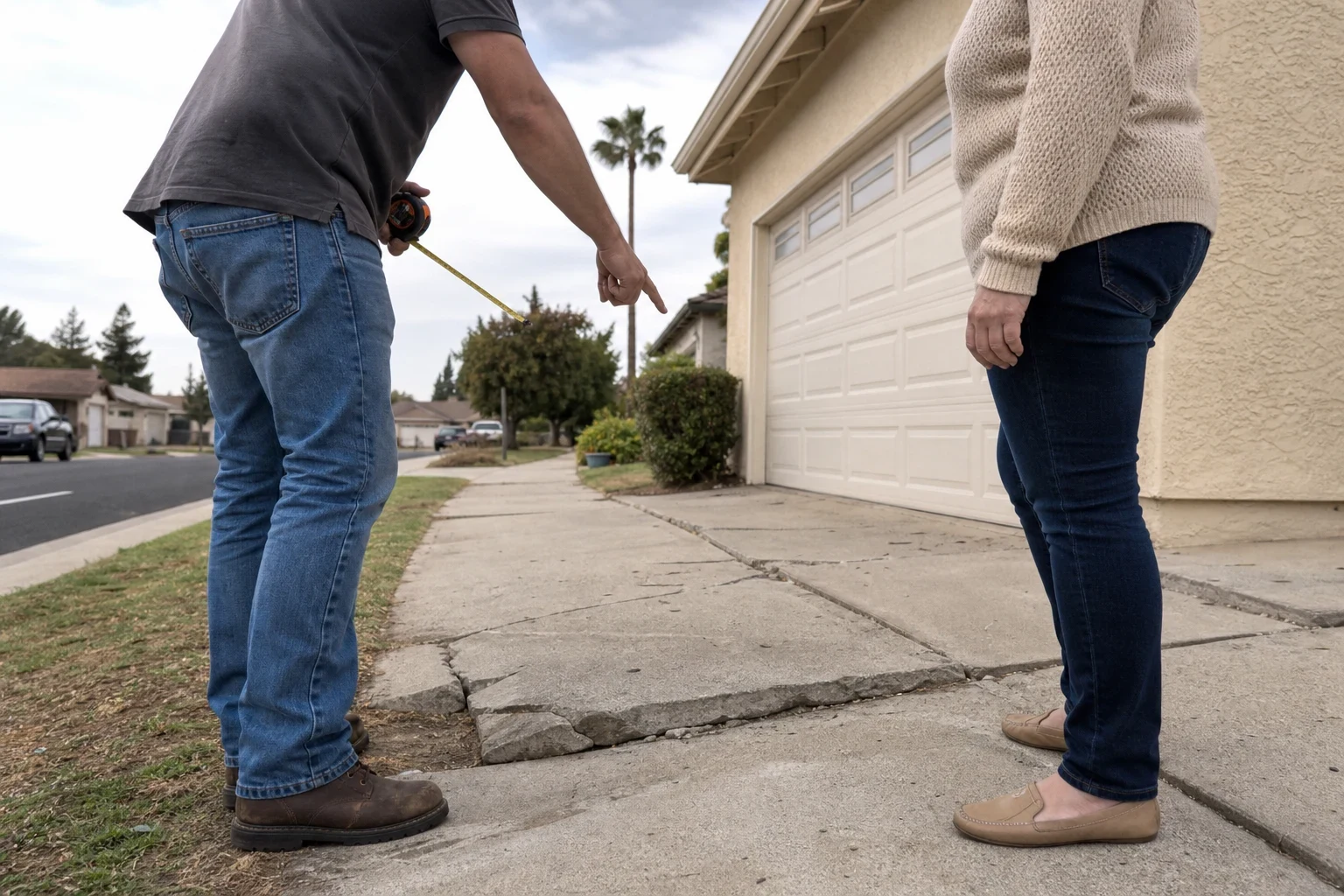
What the work includes
- 01
Removal of old steps
If existing steps are in the way, we break them out, haul the debris off and leave a clean, graded area to build on.
- 02
Compacted base and reinforcement
We place and compact a gravel base, then set rebar that is doweled into the slab, porch or foundation the steps meet. That tie keeps the steps from drifting away from the house as the soil moves.
- 03
Measured rise and run
Risers are laid out to the same height and treads to the same depth from top to bottom, within the limits residential code allows. A consistent stair is a safer stair.
- 04
Finish and edges
We use a broom finish or a light texture for traction, with tooled or rounded nosings so edges do not chip. Stamped or colored finishes are available when the steps connect to other decorative work.
- 05
Handrail planning
Where a rail is needed or wanted, we plan the post locations before the pour so anchors land in solid concrete. We explain in the quote what rail work is part of our scope.
- 06
Curing and cleanup
Fresh steps are kept moist and protected while they cure. Forms come off, the site is cleaned, and you get clear instructions on when to walk on them.
Questions about Steps and Stairs?
Call(714) 462-9549Signs it is time for new steps
Risers that are not the same height
Older steps were often poured by eye. If people catch a toe on one particular step, the dimensions are likely off and new steps are the lasting answer.
Steps pulling away from the house
A gap between the top step and the porch or threshold means the steps have settled or tipped. Expansive clay soil in this part of Orange County makes this common when steps were never tied in.
Wide cracks and loose chunks
Cracks that run through the tread, crumbling nosings or pieces that rock underfoot point to a structure near the end of its life.
Slick, worn surfaces
Troweled-smooth concrete gets slippery with sprinkler overspray or a little rain. If the steps feel risky when wet, a fresh broom finish makes a real difference.
A slope with no good way down
If you are walking down dirt or loose pavers to reach the side yard or lower lawn, a short run of formed steps gives you a safe, permanent path.
How a steps project runs
- 1
Site visit and measurements
We measure the total height from landing to grade, check the soil and drainage, and look at what the steps connect to. You tell us how you use the space and what finish you like.
- 2
Written quote
You get the scope in writing: number of steps, width, landing size, finish, demolition, rail work and any permit the city requires. Questions get answered before you commit.
- 3
Demolition and forming
We remove old concrete, compact the base, set the rebar and doweling, and build the forms. Before the pour, we check every riser height against the plan.
- 4
Pour and finish
Concrete is placed, consolidated and finished in one visit, with edges tooled and the surface textured for grip. Most step projects pour in a single day.
- 5
Cure, strip and walk-through
Forms come off after the concrete has set, and we walk the finished steps with you. Light foot traffic is usually fine after a day or two; we give you the exact timing for your pour.
What moves the price of concrete steps
Step pricing depends more on labor and forming than on the volume of concrete. A short run of wide steps can cost more than a longer, narrow one. Your written quote lists each of these factors so you can see where the money goes.
- Number, width and landings
- More risers, wider treads and a landing at the top or middle all add forming time and material. Curved or flared steps take longer to build than straight ones.
- Demolition and access
- Breaking out thick old steps and hauling the debris adds labor. Tight side yards where concrete has to be wheeled in by hand take longer than a run near the driveway.
- Finish choice
- A broom finish is the simplest. Stamped patterns, integral color or exposed aggregate add steps to the pour and finishing.
- Soil and connections
- Soft or poorly drained soil may need more base material. Doweling into an existing porch or foundation is included when the plan calls for it, and we note it clearly.
Questions about concrete steps
Can you match my new steps to an existing patio or walkway?
Usually, yes. We can match a broom or stamped texture closely, and we talk through color before the pour. New concrete always looks a little brighter than concrete that has weathered for years, and we say that up front so the result is not a surprise.
Do my steps need a handrail?
Residential code generally calls for a handrail once a stair reaches four or more risers. Even shorter steps can benefit from one, especially for older family members. We plan anchor points before the pour either way.
Do concrete steps need a permit?
It depends on the height, where the steps are and what they connect to. We check with the city during the quote stage, and if a permit is needed, we include it in the written scope.
How long before we can use the steps?
Light foot traffic is usually fine after a day or two, depending on weather. We keep a temporary path open when the steps serve your main entry, and we give you clear timing on the day of the pour.
Will the new steps crack?
Concrete can develop small hairline cracks as it cures. A compacted base, proper reinforcement and correct curing keep those minor and prevent the settling and separation you see in older steps.
Plan your new steps with us
Tell us where the steps go and how you use them. We will set up a site visit, take measurements, and put the full scope and price factors in writing.