ServicesRV Parking Pads
RV Parking Pads in Brea
Our RV pads are poured thick enough for a loaded motorhome or trailer, over a compacted base with steel inside and a pitch that drains water. You get a written scope of size, thickness, approach and every cost item before any digging.
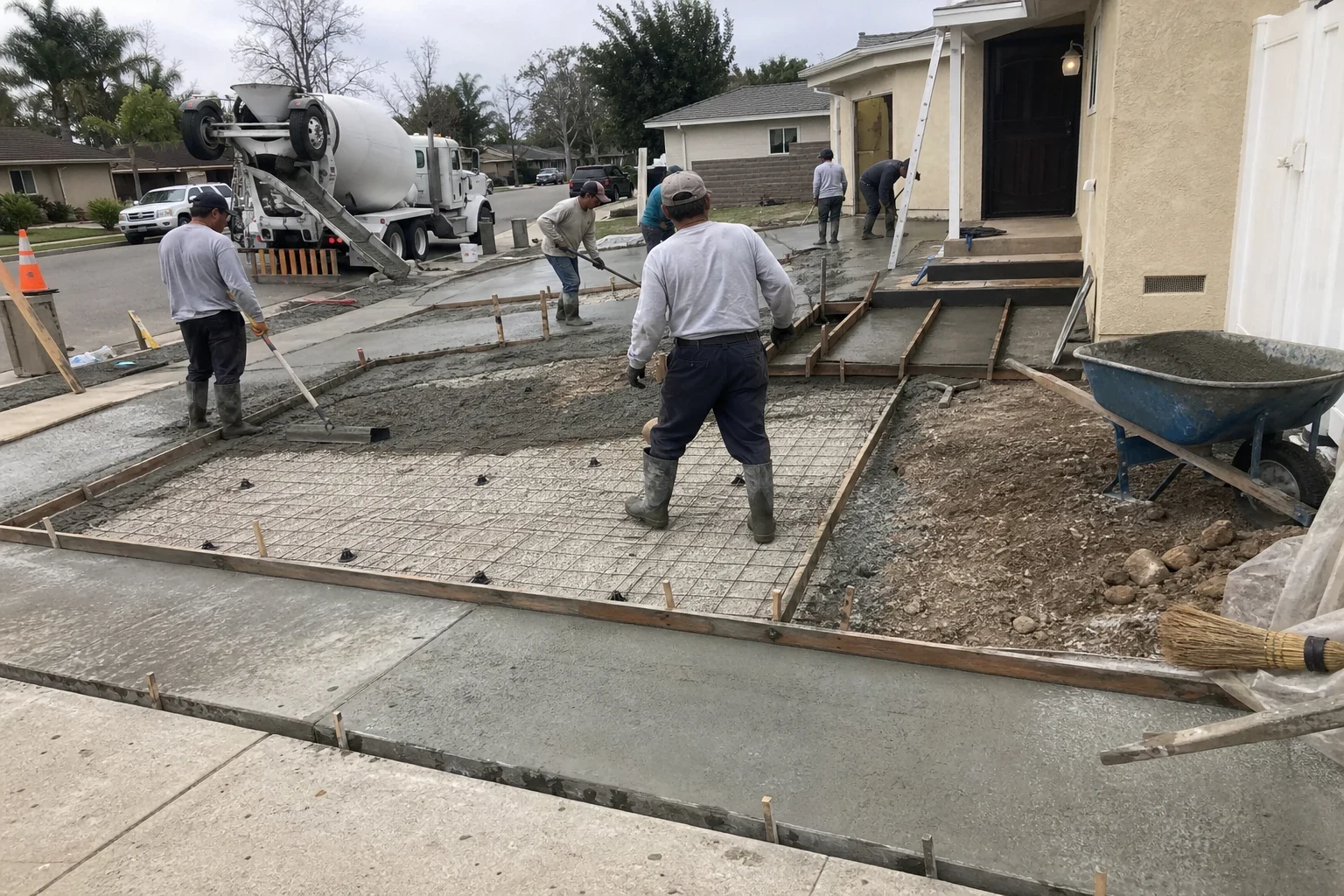
Sized for the load it will hold
An RV puts far more strain on concrete than a car. A loaded Class A or fifth-wheel presses its weight through a few tires and, once parked, through leveling jacks on small spots. A typical 4-inch walkway slab isn't built for that. We generally plan RV pads at 5 to 6 inches, with rebar on chairs so the steel sits mid-slab where it does its job.
A dedicated pad makes sense when the RV sits on dirt, gravel or grass, or when you want it next to the house without cracking a thin driveway. We check how the rig pulls in, how it turns and where it parks. Then we write out exactly what we'll build, so the price you accept is the price you pay.
What every RV pad includes
Digging and grading
Topsoil and soft fill come out down to solid ground, and we grade a slight drop away from the house. The dirt is hauled away unless you'd like some saved for planters.
Packed rock base
Crushed rock base is spread and compacted in layers. That's what stops a heavy pad from sinking, especially on the area's clay soils that swell when wet and shrink when dry.
Rebar grid
Rebar goes down in a grid raised on chairs instead of resting on the soil. It keeps the slab together if the ground shifts.
Stronger concrete mix
We call for a stronger mix than a standard patio uses and pour it to the agreed thickness, measured at the forms during the pour.
Joints and a tough surface
Joints are cut at set spacing so shrinkage cracks run straight. A broom finish gives tires traction and hides tire marks better than smooth troweling.
Connection to the driveway
Where the pad joins your driveway, we plan the joint and grade so the RV rolls over with no lip. If the street approach needs widening, the written scope says so.
When your RV needs a real pad
Ruts in dirt or gravel
The tires sink and leave tracks each time you park. Through a wet winter the ruts get deeper and the RV ends up off level.
Jacks sinking into the soil
Stacking boards under the jacks to stop them sinking means the ground is too soft for the weight.
A driveway not built for the weight
A thin driveway holding an RV often cracks near where the tires sit. A separate, thicker pad carries that load instead.
Mud, weeds and oil
Parking on dirt drags mud into the garage, grows weeds around the tires and lets oil seep into the ground. Concrete stays clean and hoses off easily.
Grass dying beside the house
Driving over lawn to get to a side gate leaves dead strips and soft ground. A pad gives the RV a set, solid route.
Steps in an RV pad job
- 1
Visit and measuring
We measure the RV, the gate or opening, turning space and yard slope. We also mark utility lines, sprinkler heads and any tree roots running under the spot.
- 2
Scope and price on paper
Your written quote covers pad size, thickness, base depth, steel, finish, joints, haul-off and any approach work. A city permit for a curb cut or wider approach is listed if needed. Nothing gets added later without your signature.
- 3
Excavation, base and forms
The crew digs, compacts the base and sets forms and rebar. You can walk the layout with us ahead of the pour.
- 4
Placing and finishing
The concrete is placed, struck off, broom finished and jointed in a single session. We clean the work area and the street before we go.
- 5
Cure and first parking
Walking on it is generally fine after a day or two. Keep the RV off longer than you would a car, since the concrete gets stronger over its first weeks; we give you the date in writing.
What drives RV pad pricing
Size, thickness and how hard it is to get material to the spot make up most of the price. Each item below is written into your quote before work starts, so you see where the money goes and can change the scope if you want.
- Dimensions and depth
- A pad for a 40-foot motorhome takes much more concrete and steel than one for a small trailer. Moving from 5 to 6 inches adds material over the entire pad.
- Reaching the spot
- With an open front yard the truck can pour straight in. A tight side yard may call for a pump or wheelbarrows, adding labor and equipment time.
- Soil conditions
- Soft fill, old roots or expansive clay can mean digging deeper and adding more base rock. We let you know what we see during the site visit.
- Clearing the current surface
- Breaking up an old slab, pavers or thick gravel and hauling it off is priced on its own line.
- Street approach and permits
- A wider driveway approach or new curb cut generally means a city permit and work in the public right of way, listed separately.
Common RV pad questions
Something not covered here? (714) 462-9549
What thickness does an RV pad need?
Most motorhomes and fifth-wheels call for 5 to 6 inches over a compacted base, with rebar. Lighter trailers can sometimes be a bit thinner. We set the figure from your RV's weight and put it in the quote.
Can the pad go in my side yard?
Often it can, if the gate width and turning space let the RV in. We measure both on the visit. If the gate has to be widened, that's good to learn before the pour, and we'll flag it.
Is a permit or HOA approval needed?
A pad fully on your property often needs no building permit, but a new curb cut or wider approach usually does, and some cities and HOAs restrict where RVs can park. Review your HOA rules early. Any permit we expect to pull is noted in the written scope.
When can I park the RV on it?
Expect to wait longer than you would for a car, because a heavy rig on a few points demands more from new concrete. We give you an exact date based on the mix and curing weather.
Is the pad going to crack?
Concrete shrinks while curing, so fine cracks can happen. Control joints, a firm base and rebar keep cracking along straight, planned lines and hold the pieces from drifting apart.
Will it match my driveway or patio?
We can match the broom finish and joint pattern so it looks like part of one layout. Stamped finishes are an option, though plain broom holds up best under heavy tires. See our Driveways and Stamped Concrete pages for those choices.
Get your RV off the dirt
Tell us about your RV and where you'd like it parked. We'll come by, measure the spot and give you the full scope in writing before work starts.