ServicesSide Yards
Concrete Side Yards in Brea
The strip between your house and the fence does a lot of quiet work. It carries bins, hoses and water. We pour side yards that slope water away from your home, sit at the right height against the stucco, and stay clean underfoot.
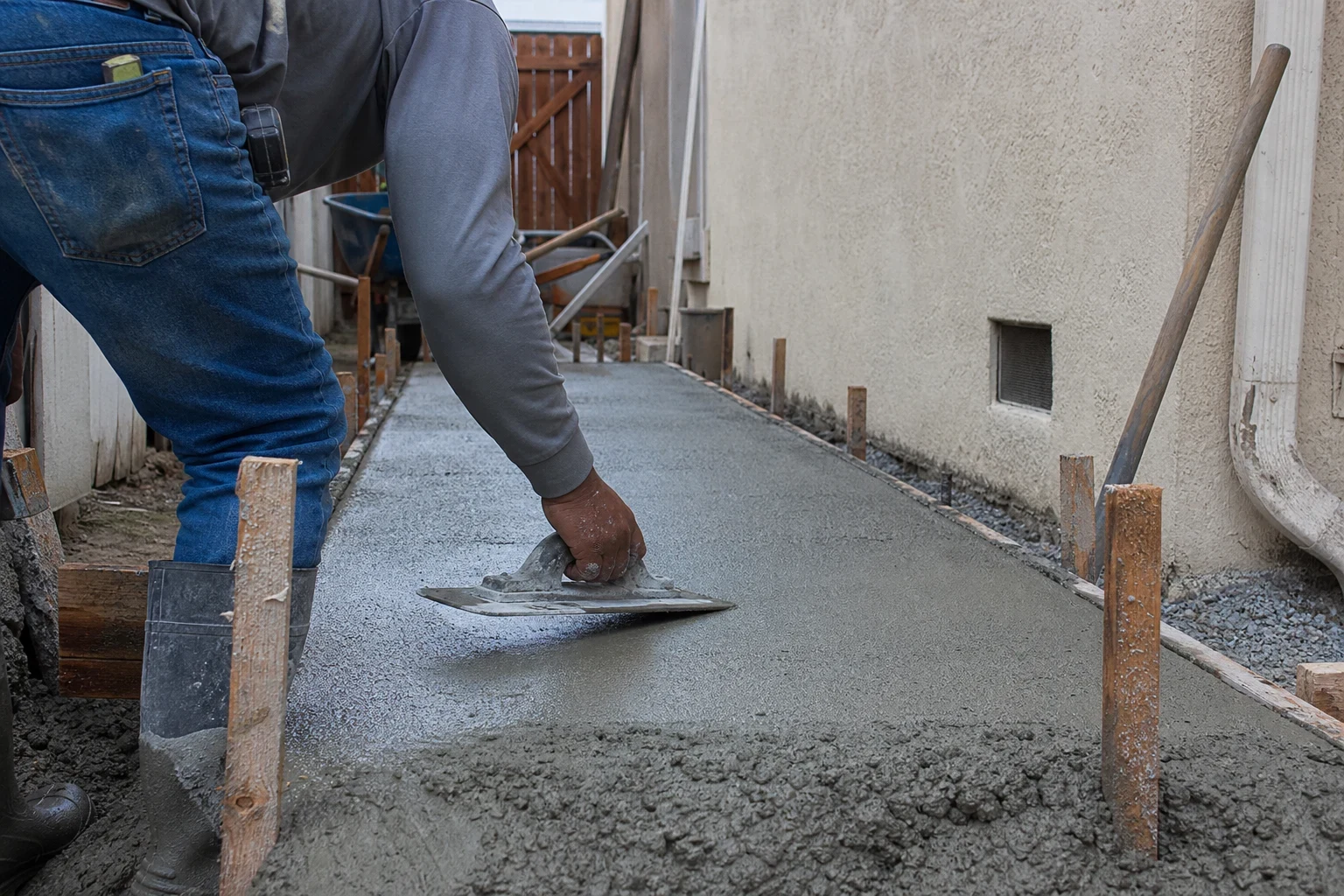
Grading a tight strip the right way
Most side yards run three to eight feet wide, boxed in by the house on one side and a fence on the other. Roof runoff lands there, the gas meter and AC condenser sit there, and the trash bins roll through every week. Over time bare dirt goes muddy, gravel spreads out and old pavers sink out of line.
A concrete slab solves those problems, as long as it is set at the right levels. It needs to drop away from the foundation, stay below the stucco weep screed and carry water to a drain or the street. Most of our planning goes into those levels before any concrete is mixed.
Before we begin, you receive a written scope with the square footage, slab thickness, reinforcement, any added drains and the way we will get concrete into the space. Anything not listed there is not in the price.
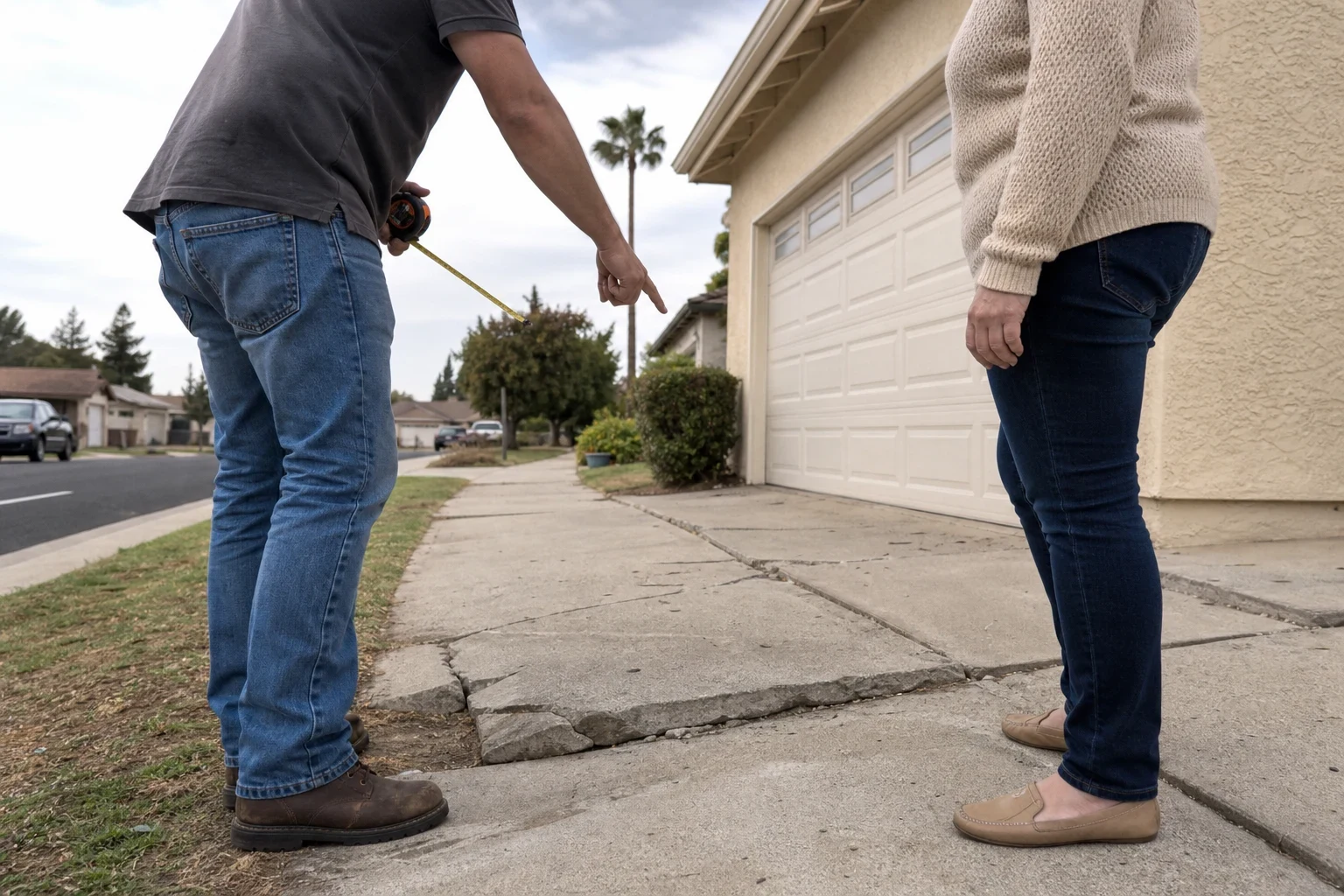
What's part of a side yard job
- 01
Digging and hauling
Soil, roots and old gravel come out to the depth the base and slab require, and we haul it off. In a narrow yard much of this is done by hand and wheelbarrow, and the quote accounts for it.
- 02
Packed base
Crushed aggregate base is spread and compacted for firm, even support. Swelling clay soil is common in north Orange County, and a solid base helps the slab handle the seasonal shifts.
- 03
Slope and drains
Forms are set so the surface drops away from the house, usually around a quarter inch per foot. Where water has no way out, we can add an area drain or channel drain piped toward the street.
- 04
Stucco clearance
A slab poured too high against stucco traps moisture behind the wall. We keep the finished surface below the weep screed so the wall drains the way it was designed to.
- 05
Steel and control joints
Rebar or wire mesh holds the slab together, and tooled or saw-cut joints give it a planned spot to crack. On a long, skinny pour, joint spacing matters more than most people think.
- 06
Finish and cleanup
Most side yards get a light broom texture for grip on damp mornings. We rinse walls and fences, pull the forms and leave the space ready for bins once the slab has cured.
Questions about Side Yards?
Call(714) 462-9549When a side yard needs concrete
Puddles after it rains
Water collecting along the foundation or soaking the bottom of the wall means the grade runs the wrong way. A sloped slab with a drain carries it off.
Mud on the way to the bins
Pushing cans over soft dirt or loose gravel wears thin quickly. A firm, flat surface makes the weekly trip simple.
Weeds that keep coming back
Bare dirt and gaps between pavers keep sprouting weeds. Concrete seals the ground for good.
Heaved pavers or old concrete
If the current surface slopes toward the house or catches people's feet, we tear it out and pour a new slab on fresh base.
Equipment on bare soil
Pool pumps, water heaters and AC units last longer on a level pad than on ground that shifts and stays damp.
Steps in a side yard project
- 1
Walk-through with you
We measure the length, check the gate width, see where downspouts drain and note meters, hose bibs and equipment. Then we ask how you use the space.
- 2
Scope and price on paper
The plan comes to you in writing: dimensions, thickness, base, reinforcement, drainage and how we will get concrete in. We go over each line so you know what the price covers.
- 3
Prep and forming
The crew digs out, compacts the base, sets forms to the planned fall and places the steel. Walls, windows and plants nearby are covered before the concrete shows up.
- 4
Pouring and finishing
Concrete arrives by wheelbarrow or line pump, depending on access. In one session we screed, float, tool the joints and broom the surface.
- 5
Curing and walk-through
Walking on it is generally fine after a day or two. We let you know when bins and heavier equipment can return, and look over the finished slab together.
What sets the price of a side yard
Side yards are usually smaller than driveways, yet the tight access affects the price more than the square footage. Each factor below is laid out in your written quote, so the number you approve is the number you pay.
- Getting concrete in
- A wide gate and open path keep the job simple. A narrow gate, or a yard you can only reach through the garage, may need a line pump or more hand work.
- The current surface
- Old concrete, pavers or deep roots mean demolition and hauling. Bare dirt costs less to prep.
- Drains and piping
- Area drains, channel drains and the pipe running to the street add material and trenching time.
- Length and layout
- A long, straight run goes quickly. Step-downs, jogs around equipment pads or a tie-in to an existing patio take extra forming.
- Surface finish
- Broom is the usual finish here. Color or a stamped concrete pattern adds material and finishing labor.
Common side yard questions
How does concrete get into a narrow side yard?
That comes down to the gate and the route. Short runs with easy access get wheeled in. Longer or tighter runs get a line pump that pushes concrete through a hose, so the truck stays on the street and off your lawn.
Will a new slab affect drainage around my home?
It should make it better. We pitch the slab away from the foundation and plan where the water goes, whether to the front yard, a drain or the street, and we show you that flow before the pour.
Can you pour around the AC unit and gas meter?
Yes. We form cleanly around meters, condensers and hose bibs, and can thicken the pad where equipment sits. If another trade needs to move something, your written scope says so up front.
What thickness does a side yard slab need?
Four inches is the standard for foot traffic and bins. If a trailer or small equipment will park there, we recommend a thicker slab with more reinforcement and list it in the quote.
Can it match my patio or walkway?
We can match the finish and joint pattern of the concrete around it. New concrete reads lighter than older slabs for a while, and we are straight with you about how close the match will be. If a new walkway or patio is also planned, pouring both at once often makes sense.
Plan your side yard with us
Tell us the length, the gate width and what has been bothering you about the space. We will set up a visit and put the scope and price in writing before anything starts.