ServicesPool Decks
Concrete Pool Decks in Brea
We build new concrete pool decks that give bare feet good grip, stay comfortable underfoot and shed water away from the pool. Before any demolition starts, you get a written quote that lists the square footage, the finish, the drainage plan and every line item you'll pay for.
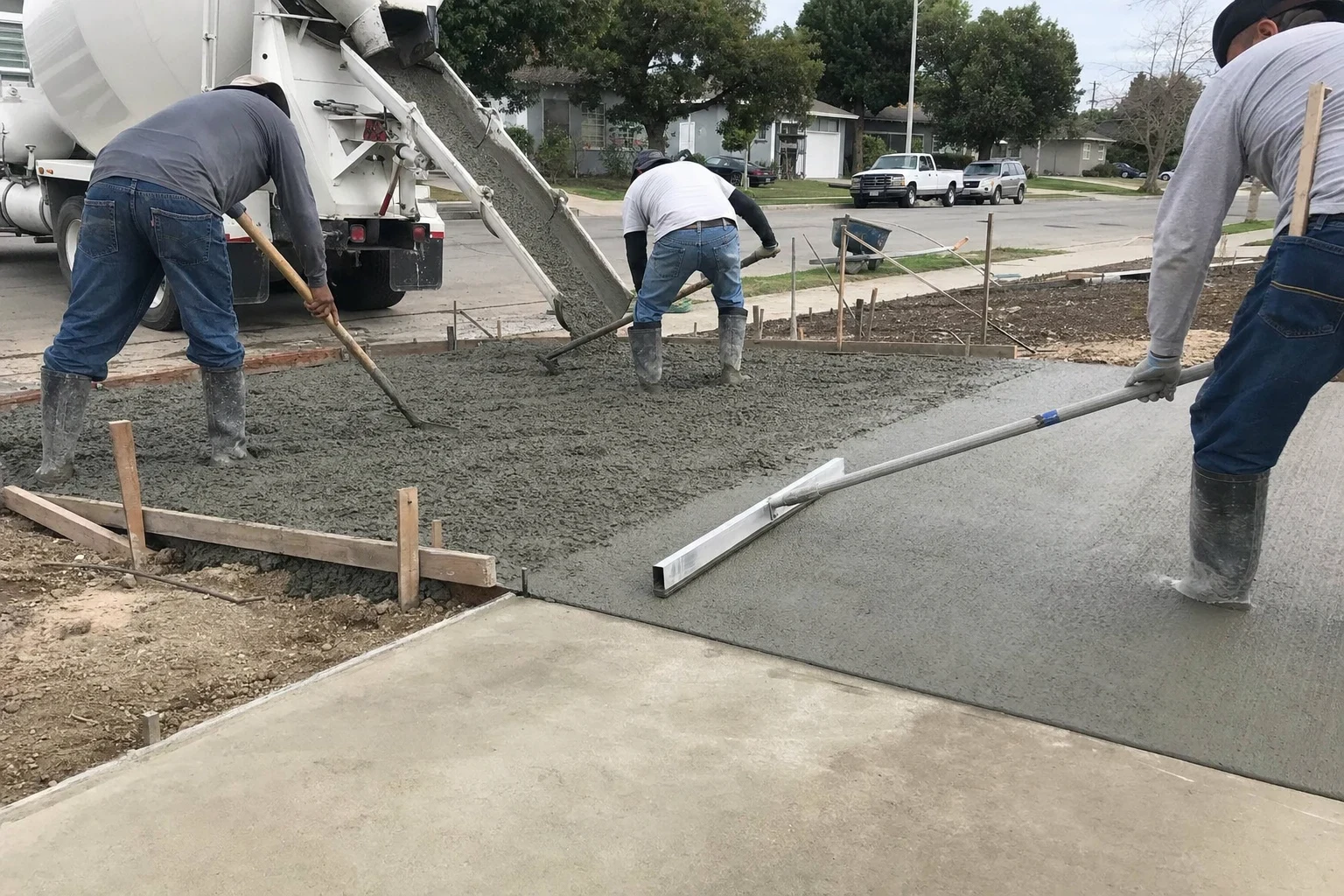
A deck made for wet feet and full sun
A pool deck works harder than almost any other slab at your home. It is wet most of the summer, it takes splash water loaded with chlorine or salt, and people cross it barefoot and in a hurry. The concrete has to be textured enough to grip, smooth enough to be kind to feet, and sloped so water never sits against the coping or runs back toward the house.
We place new decks around existing pools and full replacements where the old deck has worn out. On hot afternoons, lighter colors and textured finishes stay noticeably more comfortable than dark, smooth concrete, so we talk through color and finish early instead of treating them as an afterthought.
Everything we plan to do is set out on paper before work starts: the area, the base preparation, the reinforcement, the finish and the joint sealing. If something on site would change the scope, you hear about it and approve it first.
What a pool deck project includes
Removal of the old deck
We saw-cut and break out the existing concrete, keeping debris clear of the water and the coping. Hauling away the old material is listed as part of the scope.
Compacted base and steel reinforcement
The soil is graded and compacted, then reinforced with rebar or mesh as the slab requires. A solid base is what keeps a deck flat around the pool for years.
Drainage slope and deck drains
We set the forms so the surface falls away from the pool edge, and add deck drains where a yard has nowhere else for water to go.
A slip-resistant finish
Choose from a broom finish, a rock salt finish, exposed aggregate or a textured pattern from our stamped concrete work. Each one is chosen for grip first, then appearance.
Control joints and a sealed coping joint
Control joints are cut to guide where the slab will naturally crack. The gap between the deck and the coping is filled with a flexible sealant so water doesn't get underneath.
Sealer and cleanup
Once cured, the surface can be sealed to resist pool chemicals and staining. We leave the yard swept and the pool area clean.
Signs it's time for a new pool deck
Raised or sunken sections
When slabs have shifted and edges stand proud of each other, the deck has become a trip hazard. Movement like this usually points to a base problem that a new, properly prepared slab solves.
Water that sits after a swim
Puddles that linger near the coping or drift toward the house mean the slope is wrong. A replacement lets us correct the grade from the ground up.
A finish that has gone slick
Years of foot traffic and chemicals can polish texture away. If the deck feels slippery when wet, it no longer does its main job.
Flaking and pitting
Salt and chlorine can wear the surface into scaling patches that are rough on feet and hard to keep clean.
An open joint at the coping
A wide or empty gap between deck and coping lets water reach the soil beneath, which speeds up settling across the whole deck.
How your pool deck project runs
- 1
Walk-through and measurements
We look at the pool, the existing deck, the drainage and the access to your backyard. We ask how you use the space so the layout and finish fit.
- 2
Your written quote
It breaks out demolition, base work, reinforcement, finish, drains and sealing as separate lines. If a permit applies to your project, that is listed too.
- 3
Demolition and preparation
We protect the coping and keep debris out of the water, remove the old deck, then grade, compact and set forms and steel.
- 4
Pour and finish
The concrete is placed, leveled and given the finish you chose while it is still workable. Control joints are cut at the right time to keep cracking where it belongs.
- 5
Curing, sealing and cleanup
After the slab cures, we seal the coping joint, apply sealer if it is part of your scope and clean the area before we hand the deck back to you.
What shapes the cost of a pool deck
Pool decks vary more than most flatwork because of shape, access and finish. We price each one from measurements and a look at the site, and the estimate shows how each of these factors affects your number.
- Size and shape
- Square footage drives material and labor. Curved edges, free-form pools and tight corners take more forming time than a straight rectangle.
- Removing the existing deck
- Thicker or heavily reinforced old concrete takes longer to break out and haul away.
- Finish choice
- A broom finish is the simplest. Rock salt, exposed aggregate and stamped patterns add labor and, for some, coloring and release materials.
- Backyard access
- A wide side gate lets us move concrete directly. Narrow side yards or slopes may call for a concrete pump.
- Drainage work
- Adding deck drains or regrading to fix poor runoff adds to the scope, and we list it separately so you can see it.
Pool deck questions
Something not covered here? (714) 462-9549
Do I need to drain my pool?
Usually not. We cover and protect the water and the coping during demolition and the pour. If something about your pool calls for a different approach, we'll explain it during the walk-through.
Which finish stays coolest and has the best grip?
Lighter colors stay more comfortable than dark ones in direct sun. A rock salt finish or a light broom finish gives good traction without feeling harsh on bare feet. We can show you samples so you can compare texture in person.
How soon can we use the deck and the pool?
Light foot traffic is usually fine after a few days, depending on weather. We'll give you specific timing for walking on it, placing furniture and returning to normal use, since sealing has its own wait as well.
Will the price change once you start?
The quote lists the scope and the line items before we begin. If we uncover something on site that would change the work, we stop, show you, and put the change in writing before going ahead.
Should I seal a deck around a saltwater pool?
Sealing is a good idea around saltwater pools because salt can wear at the surface over time. We'll recommend a sealer that suits your finish and tell you how often it should be reapplied.
Can the new deck connect to a patio or the rest of the yard?
Yes. Many customers pair a pool deck with a patio or a larger concrete backyard project, and planning them together keeps slopes, colors and joints consistent across the space.
Plan your new pool deck
Tell us about your pool and how you use the space. We'll set up a walk-through and follow it with a written breakdown that shows every part of the job.