ServicesConcrete Slabs
Concrete Slabs in Brea
We pour concrete slabs for sheds, hot tubs, equipment pads, patio covers and small outbuildings around your home. Before any work starts, you get the base, thickness, reinforcement and finish spelled out in writing, so the price you agree to is the price you pay.
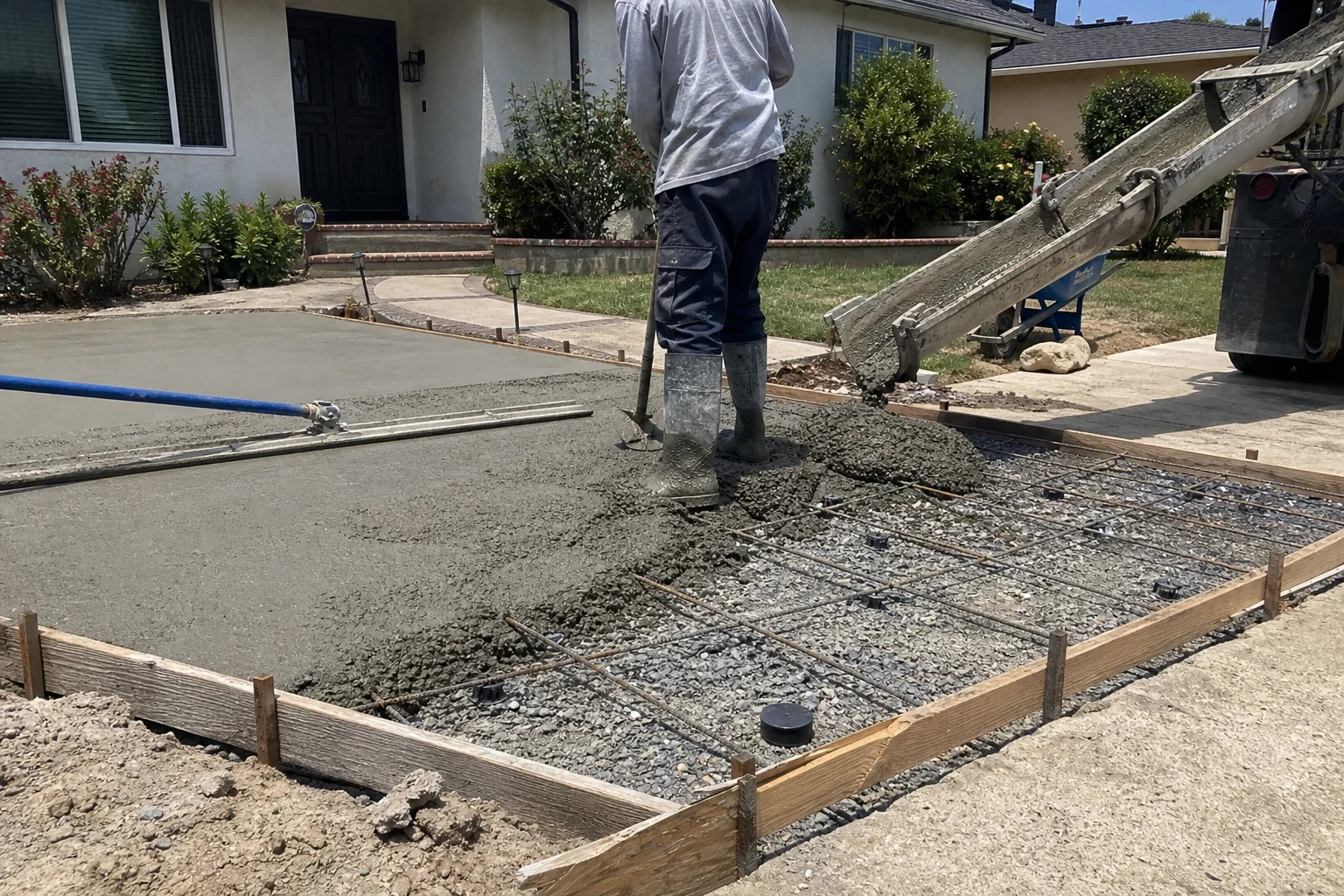
A flat, stable base for whatever sits on it
A slab looks simple. It is a rectangle of concrete. But what it carries decides how it has to be built. A garden shed, a filled hot tub and a heat pump all put different loads on the ground, and a slab that is too thin or poured over loose fill will settle, rock or crack under them.
We start with what the slab is for, then size the thickness, base and steel to match. Clay soils are common around Brea, and they swell in the winter rains and shrink through the dry months, so we pay close attention to compaction and drainage before a single yard of concrete arrives.
All of it goes into a written estimate: dimensions, depth, base material, rebar or wire, finish and cleanup. Nothing gets added once the forms are up unless you ask for it and approve it first.
What's part of every slab job
Layout and site check
We take measurements, look at slope and drainage, and mark the slab outline with you, so the size and spot are agreed before any digging.
Digging and gravel base
Sod and soft soil come out, and we spread and compact gravel to the depth the load needs. That base is what keeps the slab level for years.
Forms, steel and depth
Forms go in level or with a slight fall so water runs off. Rebar or welded wire is sized to the use, with a thicker section and heavier steel for hot tubs and equipment.
Pouring and finishing
We place, screed and float the concrete, then apply the finish you picked. Outdoor slabs often get a light broom texture for grip, while a shed or workshop floor suits a smooth trowel finish.
Joints and cure
We cut joints at planned spacing so cracks form along them instead of across the middle, and we cure the surface correctly, which counts in warm, dry weather.
Site cleanup
We pull the forms, take away extra soil and debris, and leave the surrounding area neat.
When a new slab makes sense
You're adding a shed or spa
Gravel and pavers move under concentrated weight. A full hot tub needs a level, reinforced base, and many spa makers expect one.
Equipment rests on dirt or blocks
AC condensers, pool pumps and generators hold up better on a level pad that keeps them clear of mud and standing water.
The old slab has settled or tipped
If an existing slab has sunk unevenly, sends water toward your home or lets a structure lean, tearing it out and pouring new on a proper base is often the cleaner fix.
Puddles form after rain
Low spots and standing water near the house usually mean poor grading. A new slab with a slight fall sends runoff where it should go.
A patio cover is in the plans
Posts for a cover or pergola need solid footing. Planning the slab and cover together saves cutting into fresh concrete later.
What to expect, step by step
- 1
First call and site visit
Let us know what the slab will carry and where it goes. We visit, measure, check soil, access and drainage, and answer your questions while we are there.
- 2
Scope and price on paper
We send a written scope listing dimensions, thickness, base, reinforcement, finish and any permit step. Go through it line by line and ask about anything before you agree.
- 3
Preparation
The crew digs out the area, compacts the base, builds the forms and sets the steel. Any required permit or inspection is scheduled ahead of the pour.
- 4
The pour
The concrete is placed, leveled and finished in a single session. Plan on a few busy hours and a mixer truck parked at the curb.
- 5
Cure and walk-through
Light foot traffic is generally fine in a day or two. We go over the finished slab with you and let you know when it can take its full load.
How a slab gets priced
We price each slab from its own scope and walk you through every line in writing before any work begins. Most of the cost comes from what goes underneath and how easy the spot is to reach, more than from square footage alone.
- Footprint and depth
- A bigger or thicker slab takes more concrete, more base and more labor. A hot tub pad calls for more depth than a small shed pad with the same footprint.
- Ground and base prep
- Soft or expansive soil can mean digging deeper and adding more compacted gravel. Taking out an old slab adds demolition and hauling.
- Reaching the backyard
- A tight side yard may mean using a concrete pump or wheelbarrows rather than pouring straight from the truck, which adds time and equipment.
- Steel and surface
- Heavier rebar, thickened edges or a decorative surface raise the cost. A plain broom finish keeps it simpler.
- Permit needs
- Some slabs, such as one under a structure, may call for a permit and inspection. When that applies, it goes in writing alongside the rest of the scope.
Common questions about slabs
Something not covered here? (714) 462-9549
What thickness does a hot tub slab need?
That comes down to the spa's weight when full and the soil beneath it, so we start with the manufacturer's requirements. Spa pads usually run thicker, with more steel, than a shed pad. The planned thickness is written in your quote so you can check it.
Is my slab going to crack?
Concrete shrinks while it cures, so some fine cracks are normal. Control joints give those cracks a line to follow, and a well-compacted base stops uneven settling. That is why the base has its own line in the written price.
When can a shed or spa go on the slab?
You can usually walk on it within a day or two. For heavy loads such as a full hot tub, we suggest giving the concrete more time to gain strength. You get a specific date when we hand it over.
Is a permit needed for a backyard slab?
A basic pad often needs none, but a slab tied to a structure or of certain sizes might. We check before we price the job and take care of the permit if one is required.
Can a new slab go beside my existing patio?
Yes. We plan the joint where old meets new and match the finish as closely as we practically can. If a bigger project is on your mind, our patios and stamped concrete pages cover that work.
Plan your slab with the scope in writing
Tell us what the slab will hold and where it will go. We will visit, measure and give you a written quote with every part of the job listed.