ServicesPatios
Brea Concrete Patios
Our concrete patios stay level, carry rain away from the house and keep a clean surface year after year. You get a written quote naming the base, finish, joints and cleanup before any digging, so the price is clear from the start.
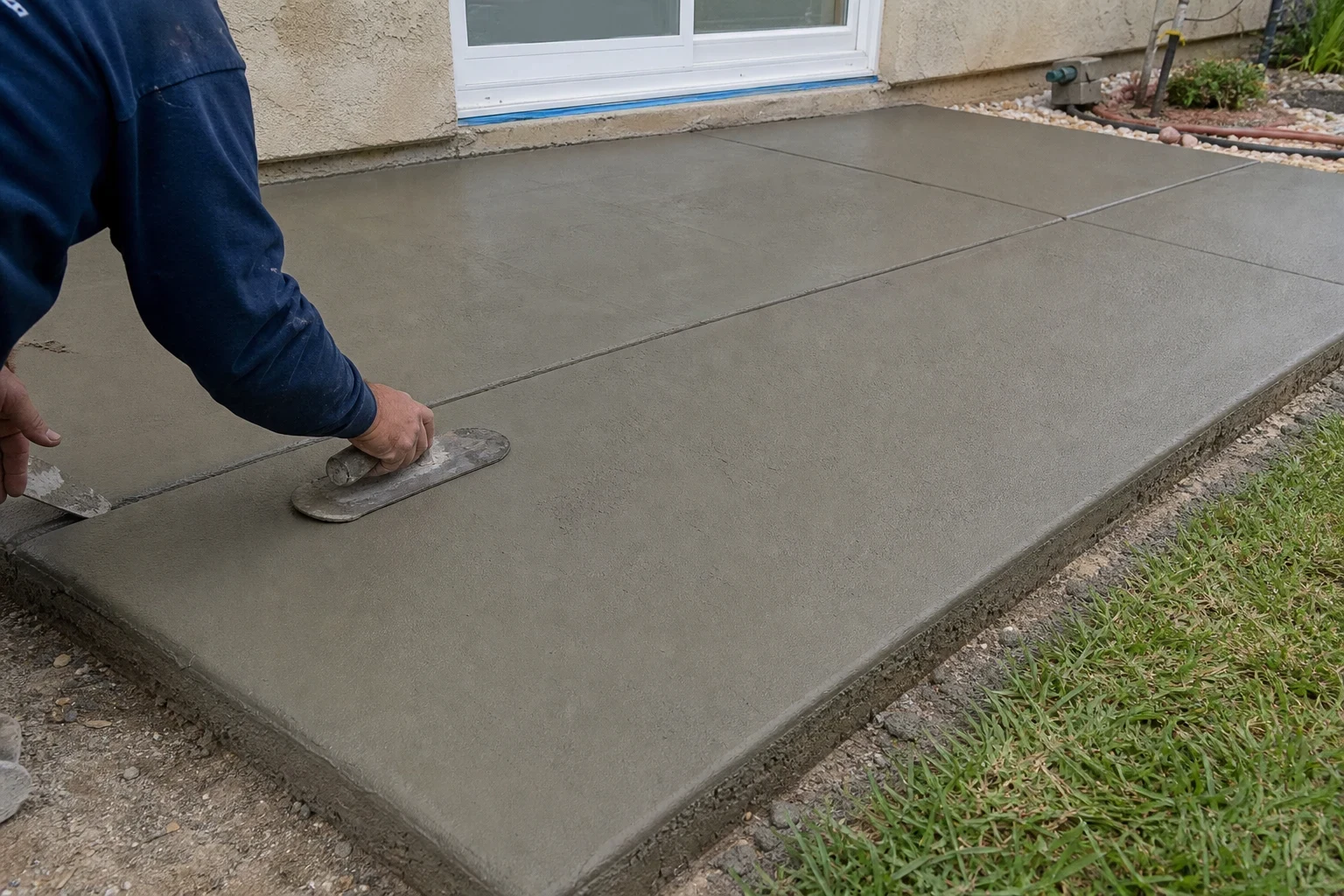
Good patios begin below the surface
The work that decides how long a patio lasts is done before the truck shows up. Soil gets compacted, crushed rock is built up as a base, and the slab is pitched so rainwater heads into the yard and away from the house. Leave those out and even a strong mix will sink, crack or leave puddles at the back door.
Each patio is laid out for the way you will use it: dining space next to the kitchen, a big slab for a grill and shade cover, or a curved edge along the lawn. Then it goes on paper. Size, thickness, reinforcement, finish and removal of any old slab are listed one line at a time, so you can compare, ask about and sign off on it knowing exactly what comes next.
Everything in a patio job
Marking out and measuring
Together we mark the outline on the ground, see where the patio meets doors and steps, and set the finished height against your house slab or threshold.
Digging out and removing the old slab
We excavate to the needed depth and haul off soil, grass or a cracked old patio. That removal shows as a separate line on the estimate.
Packed base and fall
Crushed rock goes down and is compacted in layers, and forms are set so the surface drops gently away from the house. On Brea's common clay soils, that base keeps the slab steady as the ground wets and dries.
Steel and control joints
Rebar or wire mesh holds the slab together, and joints are cut or tooled where cracking is most likely, so movement appears as a neat line in a joint instead of a random break.
The finish you pick
Choose broom, smooth trowel, exposed aggregate, salt finish or color. Patterns that look like slate or stone are covered on our stamped concrete page.
Cure and tidy up
The slab is cured correctly, forms come out, edges are backfilled, and the area is swept clean before we go.
When a patio needs replacing
Rain collects by the house
Water that gathers at the back door or flows toward the foundation usually means a flat pour or a settled slab. A new patio with proper pitch fixes the source of the problem.
Big cracks and uneven panels
Coin-wide cracks or raised edges that catch your foot tend to mean the base gave out. Once the ground under it has shifted, a fresh start is often the right move.
Pavers that won't stay put
Sinking or loose pavers with weeds in every seam lead many homeowners to a single poured slab.
Dirt or tired grass at the door
When the spot outside the back door is dusty all summer and muddy after rain, a patio makes it usable in every season.
Too small for how you use it
A stoop with no room for a table, or a slab that ends before the shade, is a good reason to rebuild at the proper size.
Steps in a patio project
- 1
Visit and written quote
We see the space, take measurements, check drainage and go over finishes. You then get a written breakdown explaining every item and what drives the cost.
- 2
Preparation
The old surface comes up, we dig, compact the base and set forms and steel. You are welcome to walk the layout with us before the pour.
- 3
Placing and finishing
Concrete is placed, leveled and finished in one session while it can still be worked. When it is hot, we start early so the surface doesn't set before the finish is done.
- 4
Curing and handoff
Joints are cut, curing compound goes on when needed, forms come off and the site is cleaned. We let you know when the patio can take foot traffic, furniture and a grill.
What drives patio pricing
We price each patio from its own measurements and site, so the number comes after we see the space, not from a rate sheet. The estimate splits the total into parts, and these move it the most.
- Size, depth and layout
- Square footage sets the concrete and labor needed. Curves, step-downs or more than one level take extra forming time.
- Surface and color
- Broom finish is the simplest option. Exposed aggregate, integral color and decorative surfaces need more material and more crew on pour day.
- Tear-out and grading
- Removing an old slab, hauling soil or regrading a yard that tilts toward the house all add work ahead of the pour.
- Getting into the backyard
- With a wide side gate we can wheel concrete right to the forms. A tight path or no truck access may require a pump, which shows on the estimate when needed.
Common patio questions
Something not covered here? (714) 462-9549
When can we start using the patio?
Walking on it is generally fine after a day or two. Give it around a week before patio furniture, and longer before heavy items such as a built-in grill or hot tub. Concrete gains strength for weeks, and we will give you timing for your slab.
Is my patio going to crack?
Hairline cracks can form as concrete cures and the soil shifts. The packed base, steel and control joints we include keep that movement small and steer it into the joints, where it is barely visible.
Does a patio need a permit?
A basic slab at ground level often doesn't, but a cover, footings or drainage changes may. We find out what the City of Brea requires for your plan, and any needed permit is listed in the written scope.
Can the patio connect to a walkway or pool deck?
Yes. Plenty of homeowners pour the patio together with a side path or bigger hardscape so color and finish match. See our walkways and sidewalks, concrete pool decks and concrete backyards pages for those jobs.
Could the price go up after work begins?
Your price comes from what we measured and agreed on together. If something hidden turns up, like buried debris, we pause, show you and settle any change in writing before continuing.
See the numbers before you plan your patio
Describe the space and how you'd like to use it. We'll come out, measure and give you the complete scope and price in writing before anything starts.