ServicesGarage Floors
Concrete Garage Floors in Brea
We remove worn, cracked or sunken garage slabs and pour a new floor built to carry vehicles for decades. Before anything is broken up, you get a written scope that spells out the base, thickness, reinforcement and finish, so the price you agree to is the price you pay.
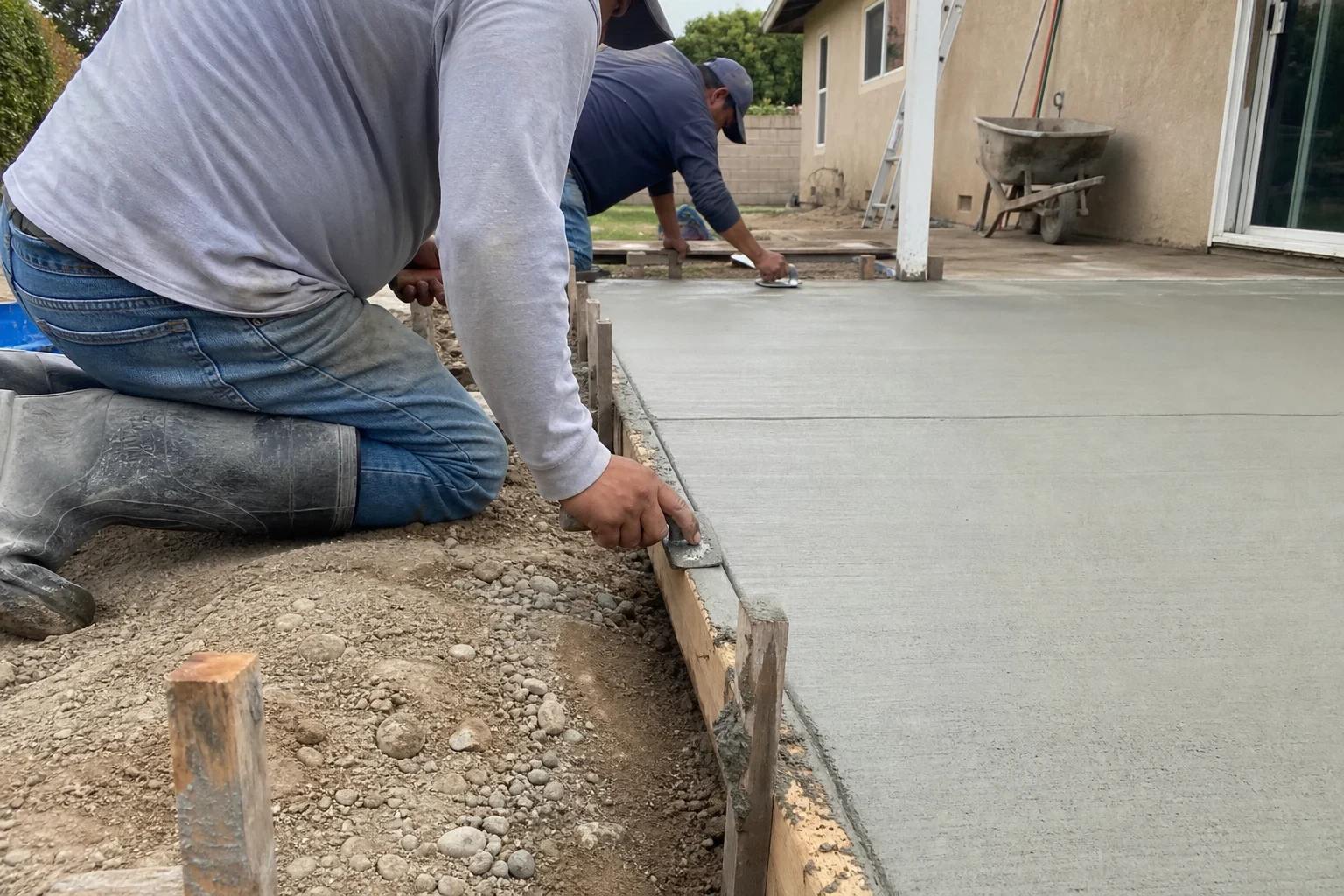
A garage floor rebuilt from the soil up
Your garage floor carries a lot without notice. It holds two cars, soaks up oil drips and hot tires, and sits tight against the house foundation. Once the slab has sunk, lifted or split into uneven pieces, patches seldom last. Removing it and pouring a new floor on a well-prepared base is usually what holds up.
Most of a floor's lifespan is decided before the truck pulls up. We dig to firm soil, compact a gravel base, raise the steel on supports so it lands mid-slab, and form the floor to drain toward the door, not back toward the house. Brea's common clay soils swell when wet and shrink in dry summers, so base prep counts more here than the surface finish.
Each of those steps is listed line by line in your quote. If something surprising shows up after the old slab is out, we stop, show you, and write up any change before going on.
Everything in a garage floor job
- Tear-out and hauling
- We saw-cut neatly at the door threshold and along the stem walls, break up the old slab and haul off the rubble. Clean cuts protect your driveway edge and garage walls.
- Subgrade and rock base
- Loose or soft soil is removed. We compact the subgrade, then lay and compact crushed gravel so the new slab has even support from wall to wall.
- Moisture barrier and steel
- When the plan includes it, a vapor retarder goes in to cut moisture rising through the slab. Rebar or welded wire sits on chairs so it stays in the center of the pour instead of in the soil.
- Pitch, depth and joints
- The floor gets a slight drop toward the door so rinse water and rain run out. Thickness is set for vehicle weight, and control joints are cut at planned spacing so shrinkage cracks stay straight.
- The finish you pick
- Steel troweling leaves a smooth surface that sweeps easily. A light broom texture grips better when wet. We show you how each looks and wears ahead of the pour.
- Cure and tidy up
- New concrete is kept damp or coated with curing compound so it strengthens evenly, which matters in hot, dry weather. Forms, tools and debris go, and the garage is left swept.
When a garage floor needs replacing
Cracks with a raised edge
Fine cracks are expected in concrete. If one side sits above the other, the base has shifted, and tires and feet will keep hitting that edge.
Water flows toward the house
Puddles at the back wall or a slab that tilts away from the door mean it has sunk or was never pitched right. Water sitting by the foundation should be dealt with.
Surface flaking or crumbling
Scaling, dusting or patches popping loose often trace to a weak original finish or too much water in the mix. Sealer can't save concrete breaking down from the top.
A drop at the garage door
A gap or step where the floor meets the driveway apron shows the soil beneath that edge has washed away or compacted.
Setting up a shop or heavy storage
Adding a lift, heavy racks or a bench with machines? A new, thicker, well-reinforced slab gives you a solid starting point.
Steps in a garage floor job
- 1
Visit and measuring
We check the current slab, how it drains and equipment access, and ask how you use the garage. Then the full scope and price go in writing so you can review them without pressure.
- 2
Emptying and tear-out
You clear the garage ahead of the start date. On the first day we cover the door, walls and nearby surfaces, then cut and remove the slab.
- 3
Base, forms and rebar
The subgrade is graded and compacted, the gravel base goes in, forms are set for pitch and steel is pinned on chairs. If your job needs a permit, we handle it and book any inspection before pouring.
- 4
Placing and finishing
Concrete is placed, leveled, floated and given the texture you picked. Control joints are tooled or saw-cut once the slab is ready.
- 5
Curing and moving back in
Walking on it is generally fine after a day or two. We tell you when it can take cars, usually around a week, and note that concrete keeps getting stronger for about a month.
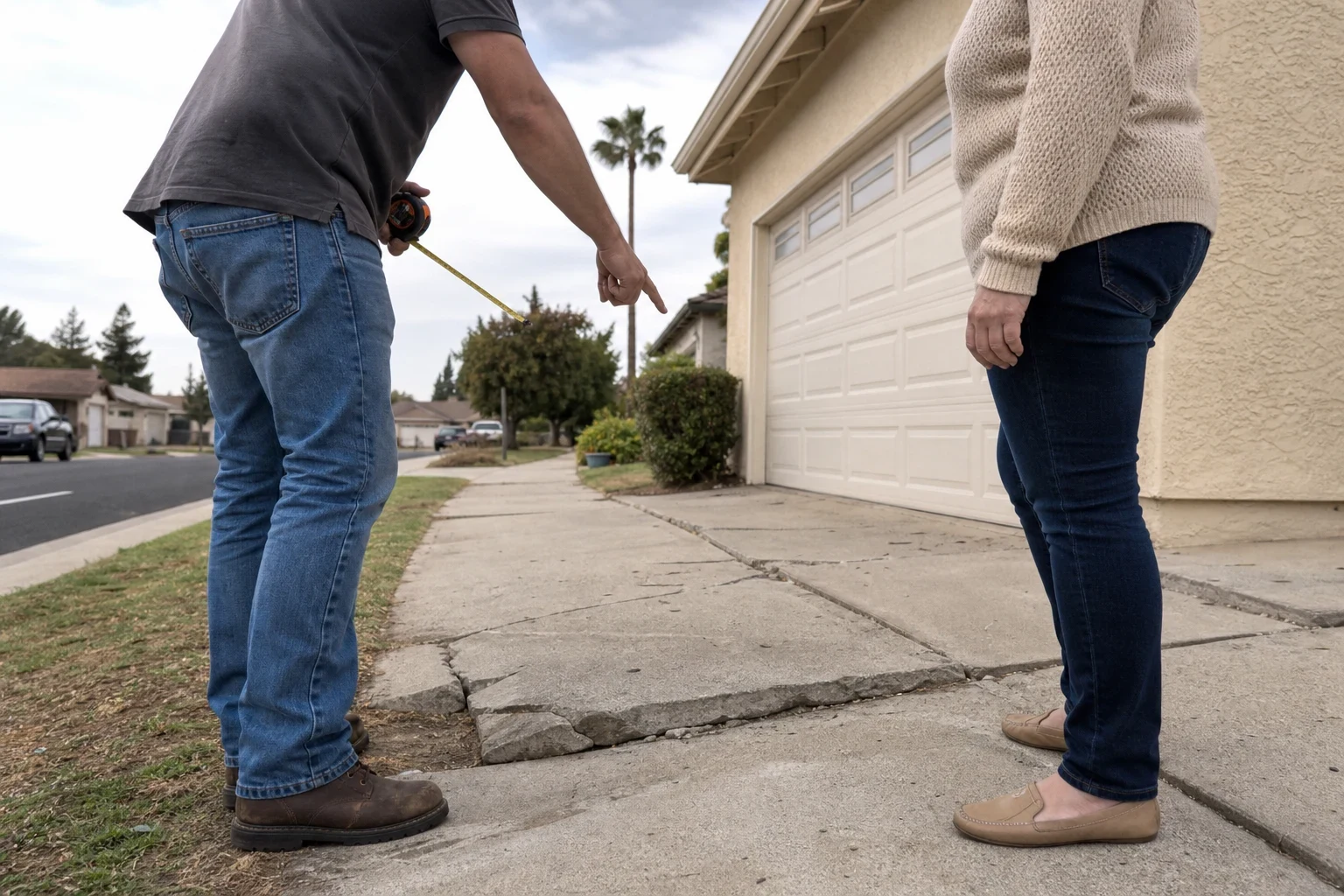
What drives garage floor pricing
The price of a garage floor rests mainly on what lies under the old slab and how much needs to change. Each part is priced separately in your written quote so you can see where the money goes, and nothing is added later without your written okay.
- Dimensions and depth
- A one-car garage and a deep three-car garage are very different jobs. A thicker slab for heavy equipment takes more concrete and steel.
- Taking out the old floor
- Thick or heavily reinforced old slabs take longer to break up and cost more to haul.
- Ground and base
- Soft, damp or expansive soil may call for deeper digging and more gravel so the new floor has solid support.
- Equipment access
- An open driveway lets the truck or pump reach the garage directly. Tight access may mean more labor or a pump.
- Finish and add-ons
- A vapor retarder, a particular texture, sealer or a new door apron each get their own line, so you can pick what fits.
Common garage floor questions
Something not covered here? (714) 462-9549
Does the whole garage have to be cleared?
Yes. The full slab is removed, so anything on the floor must be moved out first. Shelves mounted well above the floor can usually stay. We cover this when we set your start date.
When can I park inside again?
Allow around a week before driving on the floor, more in cool weather. Walking on it comes much sooner. We give you an exact date based on the mix and curing conditions.
Is the new floor going to crack?
Concrete shrinks while curing, so some fine cracking is normal. Control joints guide that movement into straight, planned lines, and a compacted base stops the slab from sinking unevenly.
Is sealing the floor worth it?
A penetrating sealer helps the surface stand up to oil, tire marks and moisture, and makes it easier to clean. It's optional and listed separately in your quote so you can choose.
Can the driveway apron be replaced too?
Often that's the right moment, since settling shows first where the two meet. For more, our driveways page covers full replacement, and both can go in one quote.
Start with a clear scope
Tell us about your garage, how you use it and what is wrong with the floor today. We will arrange a visit and give you a written quote that shows every step before any work begins.