ServicesDriveways
Concrete Driveways in Brea
We remove tired driveways and pour new ones that shed water away from your home, carry your cars for many years and look finished at the edges. Before any work starts, you get a written quote listing the base prep, reinforcement, thickness and finish, so you know exactly what you are paying for.
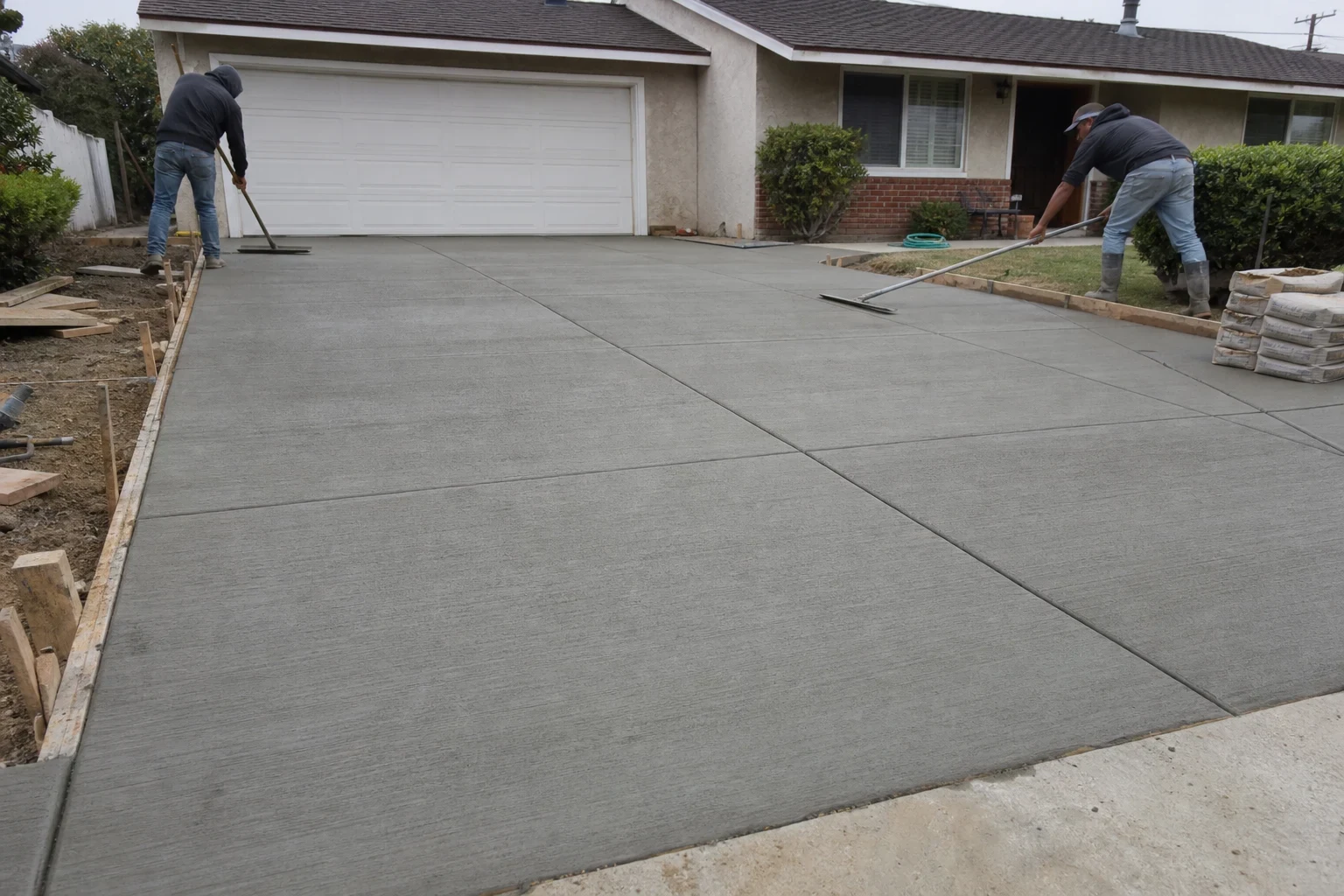
A driveway built from the ground up
A driveway is the hardest-working concrete at your home. It takes the weight of every car, the turning of tires, oil drips and years of sun. Most of what makes one last is hidden: the soil underneath, the compacted base, the steel inside the slab and where the joints are cut.
We handle new driveways and full replacements, including widening an existing drive or adding a parking strip beside it. When we look at your property, we explain what we would do and why, then put it in writing with each part of the scope spelled out. If the old base needs extra work or the approach at the street is involved, you see that on paper before the first saw cut, not partway through the job.
Many driveways around Brea were poured decades ago, often thinner than we would pour today. Replacing one is a chance to fix the slope, the width and the finish all at once.
What comes with a new driveway
- Tear-out and hauling
- Straight saw cuts separate the new work from anything that stays, then the old slab is broken up and taken to a recycler. Lawns and planters are covered while machines are on site.
- Slope and a packed base
- The soil is shaped so rain heads to the street instead of the garage or foundation. Aggregate base then goes in and is compacted layer by layer, since a slab can only be as stable as the ground beneath it.
- Steel matched to the weight
- Rebar rests on supports so it lands mid-slab, where it actually helps. If a truck or trailer parks there, we discuss a thicker pour and list it as a separate line.
- Forms, pour and hand finishing
- Forms are set to finished grade, a mix made for car traffic is poured, and the surface is finished by hand. Broom texture grips well on a sloped drive; exposed aggregate, color or a border from our Stamped Concrete work are also available.
- Joints and site cleanup
- Joints are tooled or saw-cut to a set layout so cracking happens where it is hard to see. Before we go, the forms come out, the edges get backfilled and the area is swept.
When a driveway is due for replacement
Cracks that widen every year
Hairline cracks are expected. A crack wide enough to hold a coin, or one that keeps getting bigger, usually points to movement in the base below.
Panels that dropped or rose
A panel lower than its neighbor means the soil sank or a root pushed it up. Trip edges and puddles usually come next.
Puddles by the garage
A driveway pitched the wrong way sends winter rain toward your house. Fixing the slope takes a new slab, not a patch.
A surface that flakes and shows stone
Pitting, flaking and loose aggregate mean the surface is worn out. Tires only make it rougher.
It doesn't suit how you use it now
An extra car, a wider garage door or a boat that needs a spot are all reasons to widen or rebuild. For bigger vehicles, see our Concrete RV Parking Pads page.
How the job runs
- 1
Walkthrough and measurements
We look at the existing drive, the slope, any roots and how it meets the street. You tell us how you use it and what finish you have in mind.
- 2
Written quote
It covers removal, base, thickness, reinforcement, finish and any permit work. If something is uncertain, such as soil we cannot see yet, we note it and explain how it would be handled.
- 3
Demo and prep
Removal and base work usually take a day or two. We form the new edges and set the steel, and the forms are checked for grade before any concrete arrives.
- 4
Pour day
The pour and finishing happen in one continuous push, since concrete waits for no one. We cut or tool the joints and start the cure.
- 5
Curing and handover
You can walk on it after about a day and drive on it after roughly a week. We go over care, including when it is fine to seal.
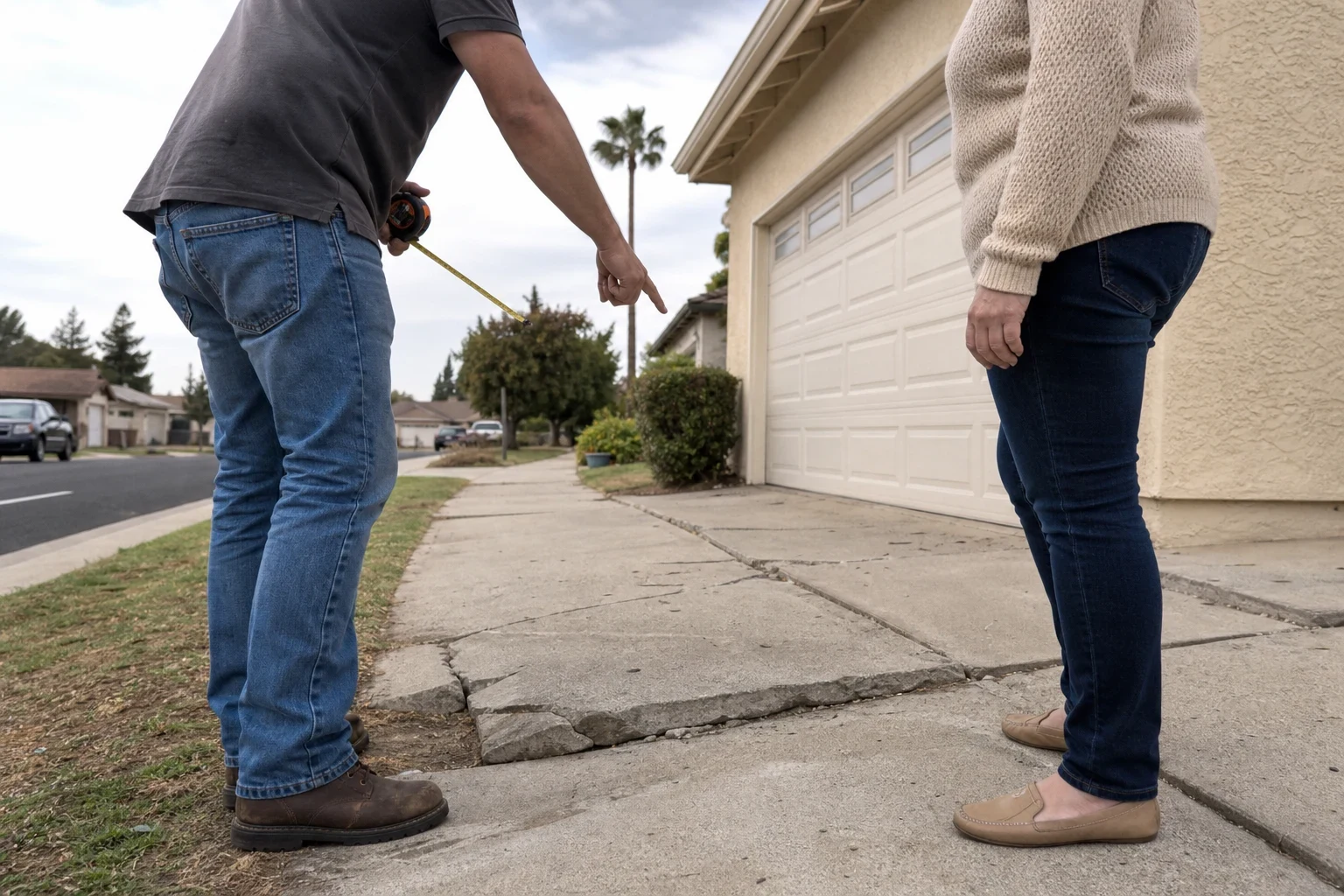
What goes into a driveway price
A driveway's cost depends on the amount of concrete and the work needed to set it on solid ground. Every one of these appears in your written quote, so you can follow the money and trim the scope if you choose.
- Area and slab depth
- The square footage accounts for most of the price. Pouring thicker for heavy vehicles takes more concrete and more steel.
- Tear-out and ground conditions
- Thick, old or steel-filled concrete is slower to break up. Soil that is soft or torn up by roots can need added base ahead of the pour.
- Surface finish
- Broom texture is the most basic option. Exposed aggregate, integral color and stamped borders call for added material and finishing time.
- Site access and the curb approach
- A cramped site may call for compact equipment or a pump truck. Work at the curb or public sidewalk usually needs a city permit, and we add it to the scope when it does.
Questions about driveways
Something not covered here? (714) 462-9549
When can I park on the new concrete?
Walking on it is fine after roughly a day. Keep cars off for about seven days so the slab builds enough strength. It goes on hardening for around a month, so hold off on heavy trucks until then.
Can the new driveway go on top of the old one?
We advise against it. A thin overlay on a cracked or sunken slab inherits the same faults and lifts the surface at the garage and the street. Taking the old slab out lets us correct the base and the slope.
Is the driveway going to crack?
Concrete shrinks while it cures, so some cracking should be expected. Planned control joints give those cracks a neat, straight line to follow. A packed base and correctly placed steel stop them from widening or shifting.
Will the job need a permit?
That depends on what we are doing. Changes to the approach, curb or public sidewalk usually call for a city permit. We let you know at the walkthrough and put it in writing when it applies.
How long will the project last from start to finish?
Most driveways take a few working days from tear-out to pour, plus cure time before you drive on them. Rain can delay the pour, and we tell you if the dates change.
Start with a clear picture of the work
Tell us about your driveway and how you use it. We will set up a time to look at it and follow with a written quote you can review at your own pace.